Baron van Swieten, the dedicatee of these symphonies, was an advocate for the "old" music of Handel and J.S. Bach, and hosted Sunday academies where Haydn and Mozart were regulars.
Compositional Technique
Carl Philipp Emanuel Bach's symphonies feature an orchestral language rich in large and even violent contrasts, treating all instruments in a particularly virtuosic, independent, and self-sufficient manner.
Composition History
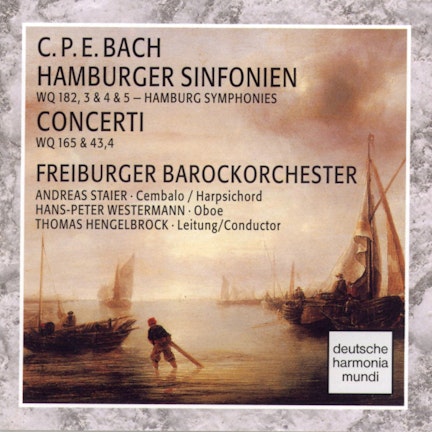
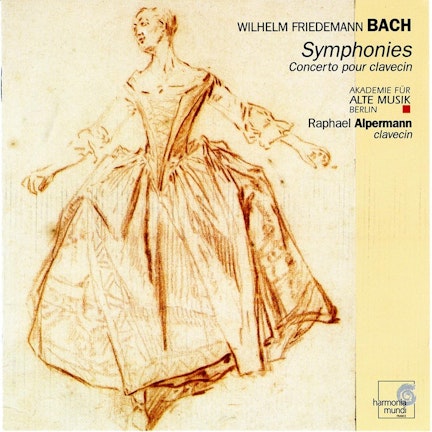
Carl Philipp Emanuel Bach composed these six symphonies in 1773 for Baron Gottfried van Swieten, a diplomat, politician, and patron, who requested Bach to compose freely without regard for performance difficulties.
Composer's Artistic Vision
Carl Philipp Emanuel Bach believed that music should primarily "move the heart," stating, "A musician cannot move others unless he too is moved."
Compositional Technique
These symphonies are characterized by a powerful first movement with bold harmonies, dynamics, rhythms, and melodies, a meditative central movement, and a light, animated third movement.
Critical Reception
These symphonies were lost for decades until Hugo Riemann discovered copies in the Thomaskirche in Leipzig, initially mistaking them for string quartets, and were only correctly published as symphonies in 1933 by Ernst Fritz Schmid.
Critical Reception
These symphonies were considered "out of time" upon their composition, differing significantly from the typical pre-classical symphonies of Bach's contemporaries, including his younger brother Johann Christian.