Orchestre de la Société des Concerts du Conservatoire de Paris
Philharmonia Orchestra
Orchestre Lamoureux
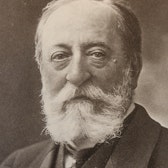
Camille Saint-Saëns
Did you know?
1/7
Performer Biography
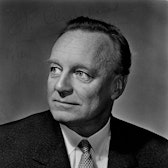
Emil Gilels, the pianist on this album, was one of the first Soviet artists allowed to travel and perform in the West, making a successful American debut in 1955.
Performer Biography
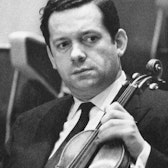
Arthur Grumiaux, the violinist on this album, was knighted by King Baudouin in 1973 for his services to music, sharing the title of baron with Paganini.
Performer Biography
Mstislav Rostropovich, the cellist on this album, is considered one of the greatest cellists of all time and greatly expanded the cello repertoire by inspiring and commissioning 117 new pieces.
Composer Biography
Saint-Saëns was an infant prodigy, playing for Boëly in 1846 and performing modern music by Berlioz and Liszt, though he later had little appreciation for 'The Rite of Spring'.
Historical Context
After the 1870 Franco-Prussian War, French composers were often seen as only focusing on opera, ballet, and salon music, prompting a movement to revive traditional forms like the solo concerto.
Composer's Artistic Vision
Camille Saint-Saëns, along with Franck and their students, advocated for a return to classical forms like the solo concerto, seeking to reinvent an original French model.
Composer's Artistic Vision
Saint-Saëns was influenced by Mendelssohn, Berlioz, and Liszt, deriving innovative ideas from Liszt's compositional methods to establish abstract genres like sonata, concerto, and symphony in France.
You might also enjoy...
Reencuentros
Szigeti: The Complete AFRS Recordings & Live Performances
Casals Festivals at Prades, Vol. 2 (1953-1962)
Mozart: Concertos
Oboe Concertos, Vol. 1
Bach: Concertos
J.S. Bach: Violin Works
Giulio Cesare: A Baroque Hero
Mozart, L. / Haydn, M. / Bach, J.C. / Telemann: Trumpet Concertos