Franco-Flemish singers and composers were highly regarded for their polyphonic art, with their Masses and motets being performed and copied across Europe, including Iberia.
Composer's Artistic Vision
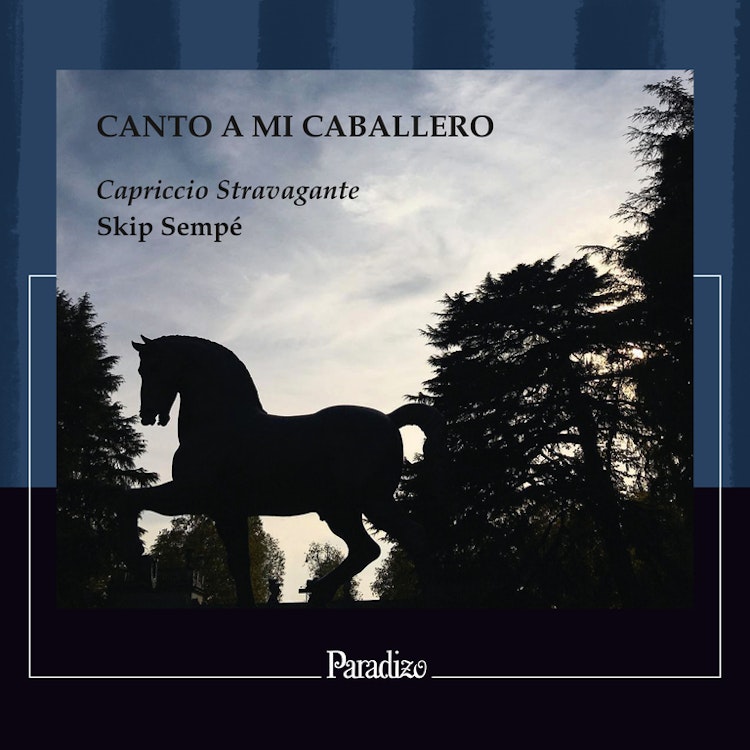
The program's musical theme, 'Canto a mi caballero', refers to Spanish songs based on a monophonic folksong, which appears in Lope de Vega's play 'El caballero de Olmedo', warning a knight of darkness.
Recording & Production
This program is dedicated to Michel Murgier, the "missing voice" of Capriccio Stravagante, who was the ensemble's cellist.
Interpretation
Skip Sempé, the harpsichordist and artistic director, believes that instrumental music transmits meaning through the "magic of sonority" and affect, rather than solely through language.
Composer Biography
Antonio de Cabezón (1510-1566), blind from birth, began his career as organist to Queen Isabella in 1526 and later served Charles V and Philip II, traveling with the latter to Italy, Holland, and England.
Historical Context
Sixteenth-century Spanish music was cosmopolitan, influenced by pan-European political alliances and trade, with musical treasures brought in by the capilla flamenca (Flemish chapel) that accompanied Charles V.
Compositional Technique
Cabezón's genius at variation technique influenced the English composer William Byrd, reversing the usual flow of musical influence into Spain.
You might also enjoy...
My Days
Christopher Tye: Lawdes Deo (Consort Music)
Agricola: Chansons
Gibbons: Keyboard Works
Inn Stetter Hut: 16th-Century Viol Music for the Richest Man in the World, Vol. 2
Keyboard Recital: Souter, Martin – Dowland, J. / Byrd, W. / Bull, J. / Farnaby, G. / Mundy, J. / Sweelinck, J.P. (The Fitzwilliam Virginal Book)
Tomkins: Consort Music for Viols and Voices
Thomas Lupo: Fantasia
Music from the Fitzwilliam Virginal Book, Vol. 1
A Candle in the Dark - Elizabethan Songs & Consort Music
Hume: Poeticall Musicke
Johnson: Elvetham Entertainment / Byrd: Fantasia / Dowland: The First Booke of Songs