Carnaval. A recital around Schumann's Carnaval, Op. 9
9/25/2020, 44 Tracks, 58:24
Featuring
Matan Porat
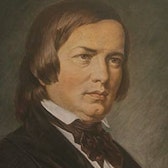
Robert Schumann
Heitor Villa-Lobos
Helmut Lachenmann
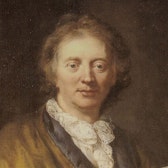
François Couperin
Igor Stravinsky
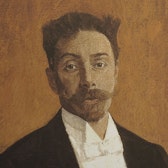
Alexander Scriabin
Jörg Widmann
Francis Poulenc
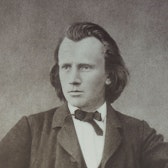
Johannes Brahms
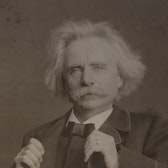
Edvard Grieg
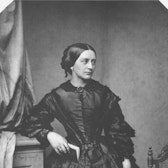
Clara Schumann
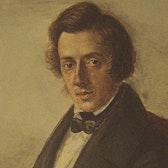
Frédéric Chopin
György Kurtág
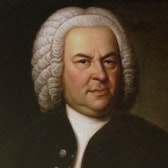
Johann Sebastian Bach
Anton Webern
Karlheinz Stockhausen
Pyotr Ilyich Tchaikovsky
Did you know?
1/7
Performer Biography
Pianist Matan Porat is known for his unique, narrative-based programming and has performed with major orchestras and in prestigious venues worldwide.
Composer Biography
The final movement of Carnaval, 'Marche des Davidsbündler contre les Philistins', refers to a fictional group Schumann formed to battle against conservative 'enemies of all true art'.
Interpretation
Pianist Matan Porat expanded Schumann's Carnaval by adding 23 short compositions by 18 different composers, from Couperin to Kurtág, to create a new, curated recital.
Compositional Technique
Schumann's Carnaval is loosely tied together by a short musical motive derived from the letters ASCH, which was the name of his fiancée Ernestine's hometown and also part of the German word for carnival, 'Fasching'.
Compositional Technique
The added pieces in this recital are connected to Schumann's original Carnaval through shared titles, similar character, homages to Schumann, or specific musical connections, such as repeated notes.
Composer's Artistic Vision
Carnaval features characters from Schumann's own imagination, such as Florestan and Eusebius, who symbolize his two contrasting fantasy personalities.
Composition History
Robert Schumann's Carnaval, composed in 1834 when he was 24, is considered one of the first post-modern pieces in musical history.
You might also enjoy...
Journey Through Childhood
Clara Wieck, Brahms, Liszt, Schumann & Godowsky: Fantasiebilder aus Wien (Piano Works)
Schumann, Mariani, Debussy: Fairy Tales
Sviatoslav Richter 100, Vol. 33 (Live)
Brahms, Schubert & Schumann, Piano Works
Child's Play
Piano Recital: Hayghe, Jennifer - Bach, J.S. / Schumann, R. / Debussy, C. / Mussorgsky, M.P. (Paintings From the Piano)
Variations on a theme by Scarlatti
Carnaval
The B-A-C-H Project
Piano for Kids 2
Meet the Composer - Francis Poulenc Playing His Own Works