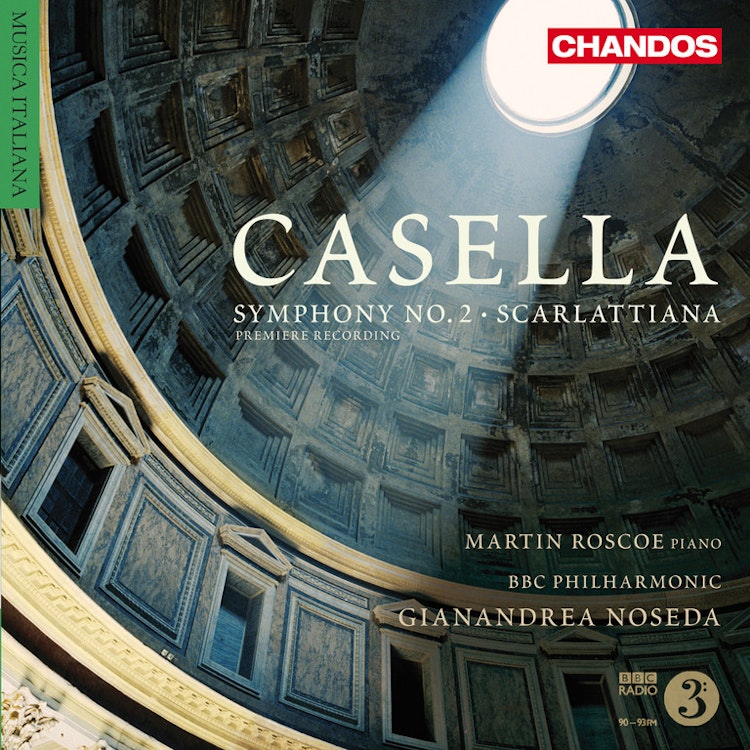
Casella's Symphony No. 2 premiered just six days after Gustav Mahler conducted his 'Resurrection' Symphony in Paris, with audience members likely noticing similarities between the two works.
Composition History
Alfredo Casella returned to Italy after nineteen years in Paris with the goal of developing an art that was both Italian and European, later discovering neoclassicism in the 1920s.
Composer Biography
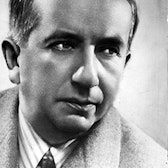
Alfredo Casella, a major exception among Italian composers of his time, was sent to the Paris Conservatoire at age thirteen for a comprehensive musical education not available in Italy.
Composer's Artistic Vision
Casella's Symphony No. 2, though influenced by Mahler, exhibits Casella's own distinctive personality, being even more excitable than Mahler and prone to extravagant complexity and driving passion into frenzy.
Composition History
Alfredo Casella's passion for Gustav Mahler's music led him to make heroic efforts to enable Mahler to conduct his 'Resurrection' Symphony in Paris in 1910, the only time Mahler conducted his own work in the French capital.
Composition History
Casella's Scarlattiana, a neoclassical work completed in 1926, is pure concert music with a concertante piano part, unlike other contemporary works based on earlier composers that were commissioned for the Ballets russes.
Composer Biography
While studying in Paris, Alfredo Casella was a fellow student of notable composers Maurice Ravel and George Enescu, the latter of whom is the dedicatee of his Symphony No. 2.
You might also enjoy...
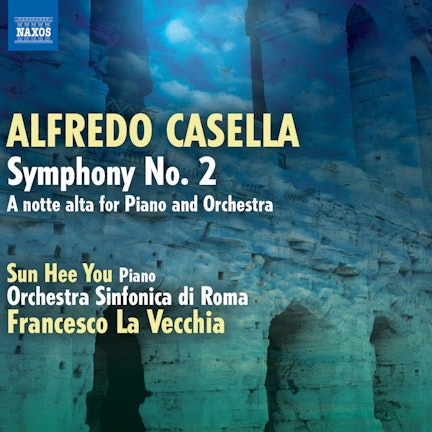
Casella: Symphony No. 2 - A notte alta
Vierne, L.: Symphony, Op. 24 / Poeme
Music of Edward Collins, Vol. III
K. Meyer: Piano Concerto, Op. 46 & Symphony No. 6, Op. 57 "Polish"
Vincent Persichetti: Symphony No. 5/Piano Concerto
Lutoslawski: Piano Concerto; Symphony No.2
Otaka: Piano Concerto & Symphony "Au-delà du temps" (Live)
Groven: Piano Concerto - Symphony No. 2
Dora Pejačević: Piano Concerto, Op. 33, Symphony in F-Sharp Minor, Op. 41
Schnittke: Concerto for Piano and Strings - Prokofiev: Symphony No. 2