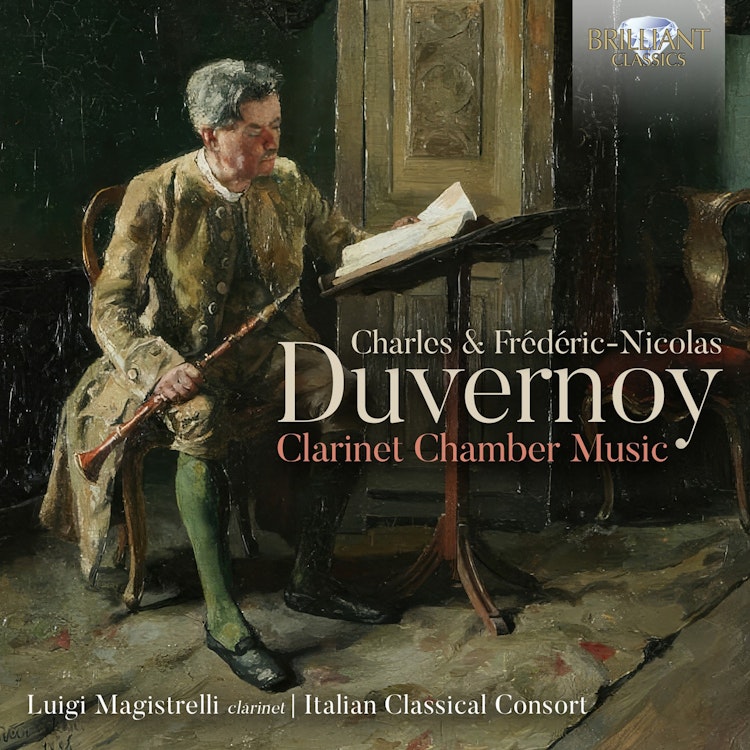
Charles & Frédéric-Nicolas Duvernoy: Clarinet Chamber Music
2/26/2024, 10 Tracks, 1:09:45
Featuring
Luigi Magistrelli
Giacomo Orlandi
Gianmaria Bellisario
Graziano Beluffi
Claudia Bracco
Stefano Furini
Laura Magistrelli
Danilo Zaffaroni
Italian Classical Consort
Charles Duvernoy
Frédéric-Nicolas Duvernoy
Did you know?
1/7
Composer Biography
Charles Duvernoy, a French clarinetist, was a professor at the Conservatory of Paris during two periods: 1800-1802 and 1808-1816.
Instruments
An early original Lefevre six-keyed boxwood clarinet from the early 19th century was used for the Two Airs varies to provide a more authentic sound for the late classical period.
Performer Biography
Luigi Magistrelli, the clarinetist on this album, has recorded 80 CDs of chamber music, orchestral works, and solo performances for various labels.
Compositional Technique
The Theme and Variations pieces by Charles Duvernoy typically feature simple themes with an introduction, followed by either five or three variations.
Composer Biography
Frédéric-Nicolas Duvernoy, brother of Charles Duvernoy and composer of the Trio No.1 on this album, was a virtuoso hornist and professor at the Paris Conservatory until 1815.
Interpretation
For the Two Airs varies, the performer chose a B-flat clarinet and a basset horn instead of the original C clarinet and bass to achieve a better timbral match.
Interpretation
In Frédéric-Nicolas Duvernoy's Trio No.1, the performer chose to use a basset horn instead of a French horn to create a new and interesting timbral situation with its velvety and nasal color.