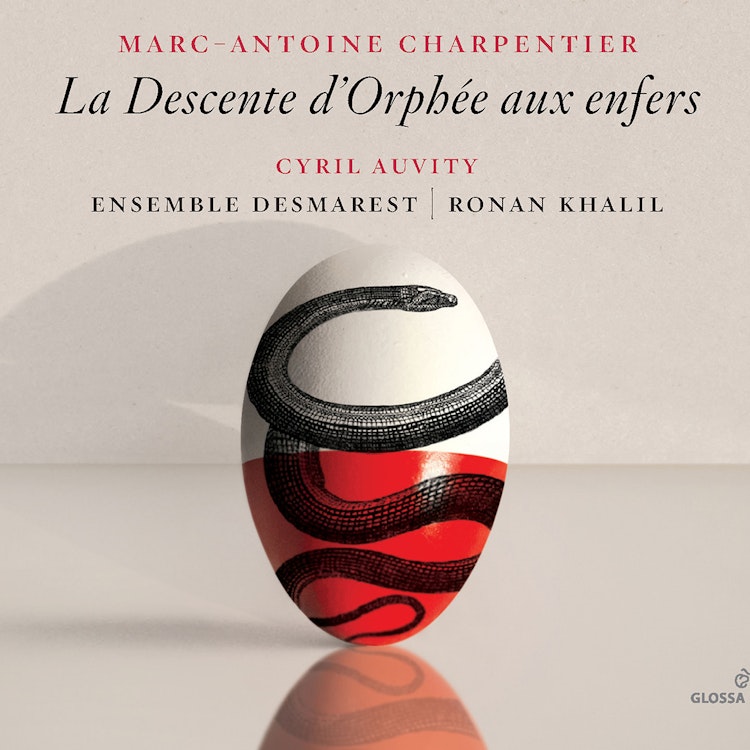
Charpentier: La descente d'Orphée aux enfers, H. 488
5/18/2018, 25 Tracks, 1:00:45
Featuring
Ronan Khalil
Maïlys de Villoutreys
Jeanne Crousaud
Dagmar Šašková
Céline Scheen
Cyril Auvity
Virgile Ancely
Guillaume Gutiérrez
Kevin Skelton
Etienne Bazola
Floriane Hasler
Ensemble Desmarest
Marc-Antoine Charpentier
Did you know?
1/6
Compositional Technique
Charpentier used distinct instrumental sounds to represent Orpheus: two violins for his earthly presence, and three bass viols for his descent into the Underworld.
Composer Biography
Charpentier worked for Mademoiselle de Guise, Marie de Lorraine, from 1670 until 1687, composing music on texts he did not choose, at her whim.
Composer's Artistic Vision
Charpentier meticulously chose musical keys based on their 'energy of the modes,' as described in his 1690 manuscript Les Règles de composition, where each key had a precise character.
Historical Context
Jean-Baptiste Lully, a Florentine composer, held an exorbitant exclusivity over opera performances in France, making it difficult for other composers like Charpentier to stage their works publicly.
Composition History
Marc-Antoine Charpentier's chamber opera, La Descente d'Orphée aux enfers, was composed in 1686 for his protector Mademoiselle de Guise.
Compositional Technique
The first act of La Descente d'Orphée aux enfers is in a light, French style, while the second act plunges into Italian music with impressive lamentations, reflecting Charpentier's time in Rome.
You might also enjoy...
Pluhar: Orfeo Chaman
Wagner: Götterdämmerung, Act III (Live)
R. Strauss: Ariadne auf Naxos, Op.60, TrV 228
Bates: The (R)evolution of Steve Jobs
Michael Hersch: Poppaea
Rameau: Les Indes Galantes
Verdi: Otello
Spontini: La vestale (1954 - Milan) - Callas Live Remastered