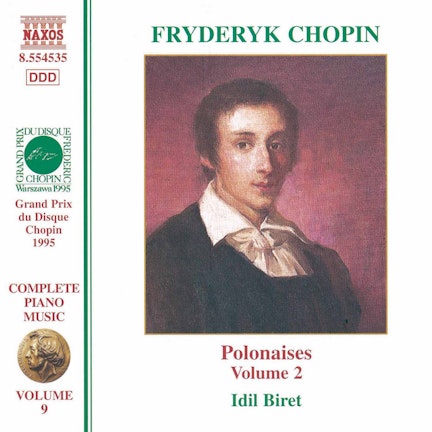
The Op. 26 Polonaises are not just virtuosic dances but proud celebrations of Poland's past and expressions of regret over its fate under Russian oppressors.
Composer's Artistic Vision
Chopin elevated the existing polonaise form to a new musical level, providing models for later composers like Liszt and Scharwenka.
Historical Context
By Chopin's youth, the polonaise had evolved from a Polish rural dance to an aristocratic ballroom dance, and he heard many such pieces growing up.
Composition History
The Polonaise-Fantaisie in A flat major Op. 61 was Chopin's last extended work, written in 1846, three years before his death.
Composition History
Chopin's Op. 26 Polonaises, composed in 1836, reflect his situation as a Polish exile in Paris.
Recording & Production
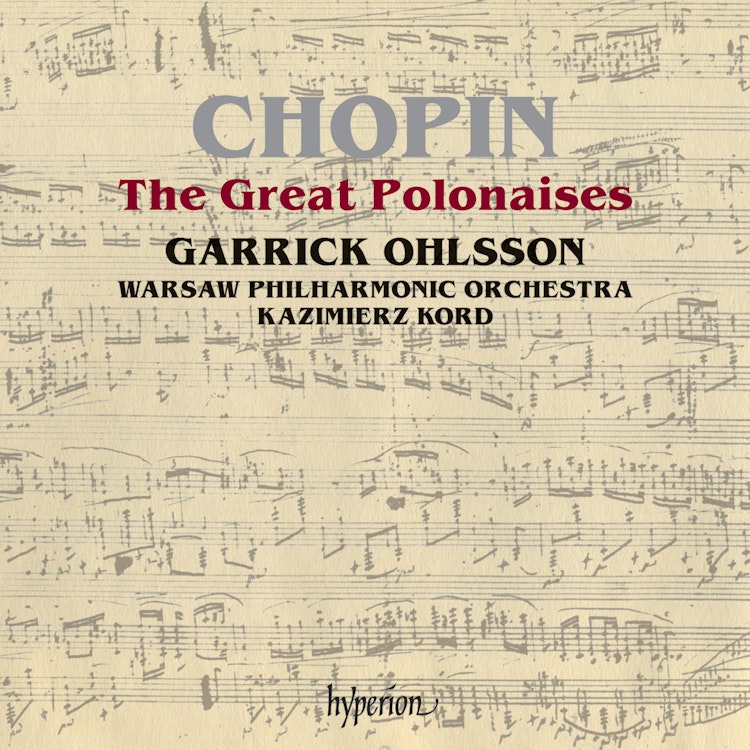
The Andante spianato and Grande Polonaise Op. 22 was recorded at National Philharmonic Concert Hall, Warsaw, in June 1997.
Instruments
For tracks 1-7, Garrick Ohlsson played a Mason & Hamlin CC28051 piano, rebuilt by William Schneider of Michigan State University School of Music.