Chopin's first Ballade, Op. 23, was inspired by Polish poet Adam Mickiewicz's narrative poem "Konrad Wallenrod," which recounts a battle between the Teutonic Knights and pagans.
Instruments
Chopin favored Pleyel pianos, appreciating their clear, elegant timbre and delicate touch, and owned two himself, including a pianino on which he gave lessons and composed.
Performer Biography
Knut Jacques, the pianist on this recording, is a dedicated teacher, holding a nationally accredited teaching certificate and serving as an Associated Professor in Burgundy.
Composer Biography
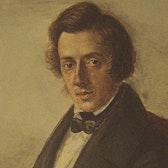
Chopin left his native Poland at age 20, knowing he would never return, just a week before the Warsaw insurrection against Russian occupation.
Critical Reception
Chopin's powerful and dramatic Sonata in B-flat minor, Op. 35, which includes the famous Funeral March, was often misunderstood; Schumann even found the Funeral March "repulsive."
Compositional Technique
Chopin's Nocturnes, while influenced by John Field (considered the father of the piano nocturne), brought a creative power to the genre that surpassed his model.
Cultural Impact
The renowned Funeral March from Chopin's Sonata in B-flat minor was orchestrated by Henri Reber and performed at Chopin's own funeral in Paris in 1849.
You might also enjoy...
Chopin: Piano Works
Chopin: Piano Works (Live)
Chopin on Period Instruments Vol. 1
Maria Perrotta Plays Chopin
Chopin: Piano Works
Chopin : Œuvres pour piano
Chopin: Ballades & Nocturnes
Chopin: Ballade No. 1 / Nouvelles Etudes / Waltzes / Nocturnes / Fantasy-Impromptu in C-Sharp Minor
Chopin, F.: Ballades Nos. 1-4 / Nocturne No. 20 / Berceuse / Tarantelle / Andante Spianato and Grande Polonaise Brillante