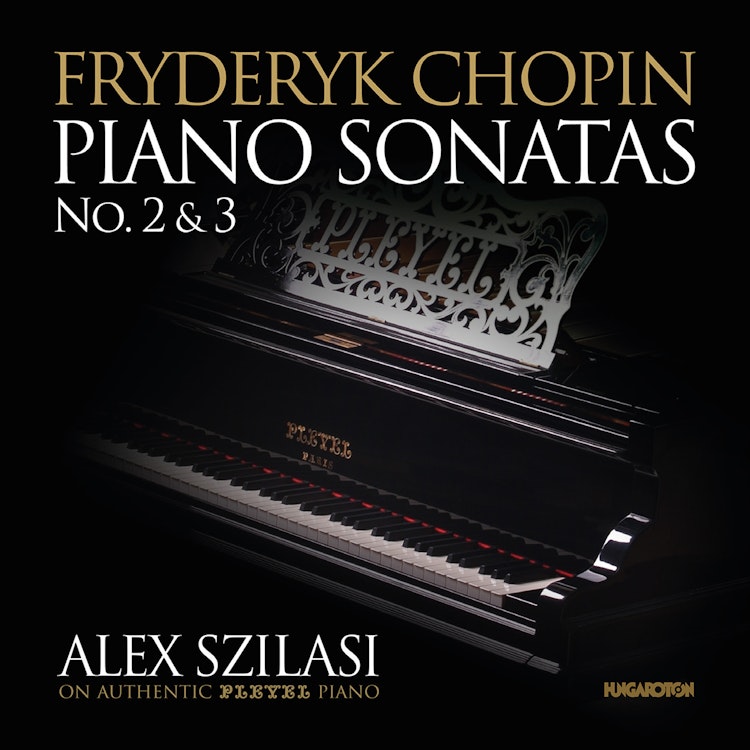
Alex Szilasi recorded Chopin's nocturnes for the Fryderyk Chopin Institute in Warsaw on an 1847 Pleyel upright piano from his personal collection, which he later donated to the Institute.
Instruments
Pleyel pianos are highly touch-sensitive, requiring a refined, relaxed touch; aggressive playing can lead to strange resonances and distorted sound.
Composer's Artistic Vision
Chopin often spent half a day at the Pleyel workshop, breaking in and testing pianos, as he was truly in love with Pleyel instruments.
Instruments
Pleyel pianos are known for their mellower sound, enabling 'pastel shades' of color, and are unrivaled in soft dynamic ranges.
Critical Reception
Chopin's Piano Sonata No. 2 in B flat minor was negatively received by contemporary critics, with Schumann calling the idea of it being a sonata 'a whim, or rather, a joke'.
Instruments
This recording features a Pleyel Concert Grand piano from around 1886-90, a brand Chopin himself favored.
Performer Biography
Alex Szilasi, the pianist on this album, is the editor-in-chief of the complete Chopin facsimile edition and has received numerous awards, including the Polish Order of Merit for Culture.
You might also enjoy...
Chopin: Piano Sonatas Nos. 2 & 3
Chopin: Piano Sonatas Nos. 1 & 2
Chopin: Piano Sonatas
Chopin: The Three Sonatas
Chopin: Piano Sonatas Nos. 1-3
Chopin: Piano Sonatas Nos.1-3
Chopin: Piano Sonatas Nos. 1-3
Chopin: Piano Sonatas Nos. 1-3
Dinorah Varsi plays Frederic Chopin: Piano Sonatas