Chopin's rubato, or 'stolen time,' involved the accompanying hand keeping strict time while the melodic hand was freed from metric restraint to convey musical expression.
Recording & Production
This album was recorded in the Clara Wieck Auditorium, Heidelberg, across several sessions in March, April, and September 1991, and February 1992.
Compositional Technique
Chopin's characteristic piano idiom draws inspiration from contemporary Italian opera, Polish music, and his own adventurous approach to harmony and technical ability.
Interpretation
Chopin's conception of piano sound was based on the human voice, unlike Liszt, who aimed to reproduce the richness of an orchestral palette on the piano.
Composer Biography
Chopin's professional career was largely spent in Paris, where he became a fashionable teacher and performer in wealthy homes, preferring salons over large concert halls.
Composer's Artistic Vision
Chopin's musical background was classical, based on Bach, Mozart, and Haydn, and he found Beethoven's music, admired by Liszt, occasionally uncouth compared to Hummel's classical restraint.
Composer Biography
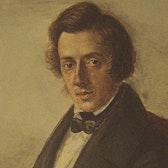
Fryderyk Chopin, born in 1810 near Warsaw, was the son of Nicolas Chopin, a Frenchman who moved to Poland and worked as a tutor and French teacher.