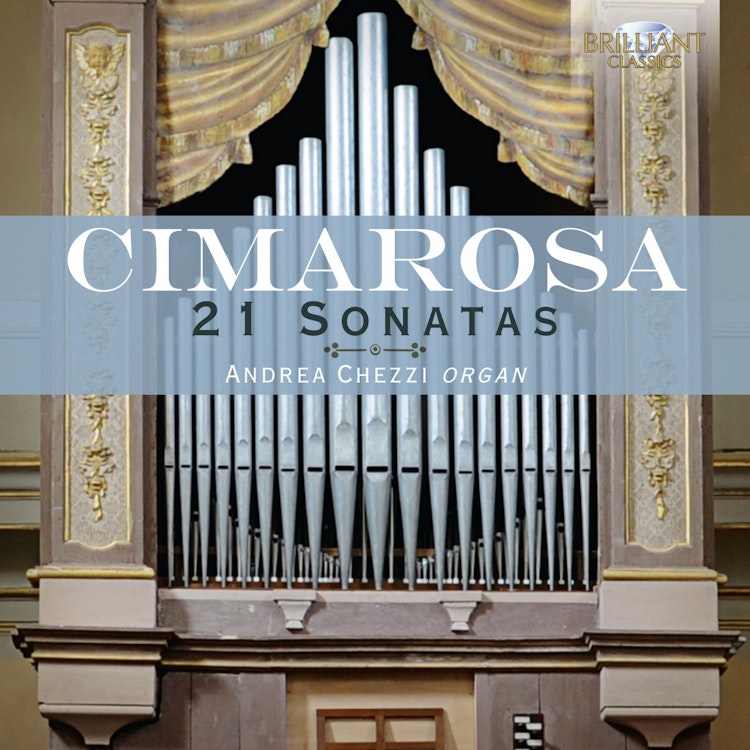
The Italian organist Luigi Ferdinando Tagliavini, a 20th-century figure, frequently performed Domenico Cimarosa's sonatas on historic Italian organs, suggesting that the fortepiano indication was not strictly binding.
Composer Biography
Despite a career as an opera composer that led him to travel widely, Domenico Cimarosa held the post of organist at the Royal Chapel in Naples for thirty years, starting in 1779.
Composer Biography
Domenico Cimarosa was considered an excellent harpsichordist, violinist, singer, and organist after concluding his studies at the Beata Vergine di Loreto Conservatoire in Naples.
Interpretation
The distinction between organ, harpsichord, and fortepiano was less clear-cut in Italian composers' music than in northern Europe, supporting the choice to perform Cimarosa's sonatas on the organ.
Recording & Production
The selection of sonatas for this recording does not follow their original order, partly because the manuscript sources are not original copies, making their true sequence uncertain.
Composer Biography
Domenico Cimarosa, the composer, received his early musical education from Father Polcano, the organist of the church of San Severo in Naples, after his father died and his family became very poor.
Interpretation
The sonatas on this album, originally written for fortepiano by Domenico Cimarosa, are performed on the organ because playing opera symphonies and Italian keyboard sonatas on the organ was a common practice in the 1700s.
You might also enjoy...
Scarlatti, D.: Organ Music (Historic Organ Music Series, Vol. 2)
Scarlatti: 24 Sonate per organo
D. Scarlatti: Complete Keyboard Sonatas
Pasquini: Sonatas for Two Organs
D. Scarlatti: Sonatas
D. Scarlatti: Keyboard Sonatas
Wanda Landowska plays Bach, Mozart, Händel, Scarlatti, Rameau
Bach - Scarlatti - Händel
Domenico Scarlatti: 20 Sonatas on Gravicembalo col piano e forte