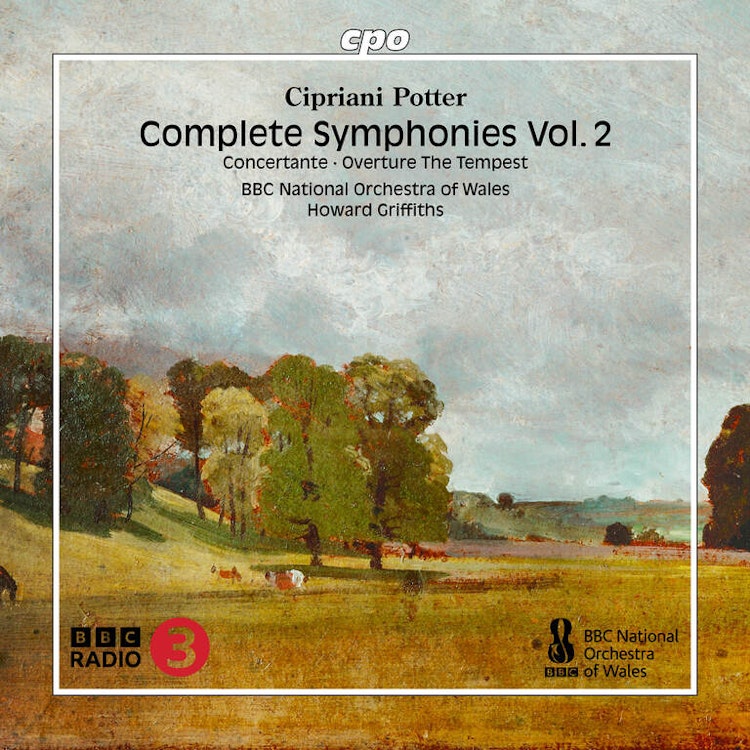
Potter visited Beethoven, who was completely deaf at the time, in Vienna to present his compositions and received valuable guidance, with Beethoven praising his talent.
Composer Biography
Potter's unusual first name, Cipriani, came from the family name of an Italian godmother, and he proudly signed his manuscripts with it throughout his life.
Historical Context
The Philharmonic Society, founded in London in 1813, established a permanent orchestra and strategically planned its repertoire, which initially focused on Haydn, Mozart, and Beethoven, but also stimulated local compositions.
Composer Biography
During his studies, Potter memorized all of Bach's 'The Well-Tempered Clavier' and even studied Beethoven's piano sonatas against his teacher's wishes.
Composer Biography
Cipriani Potter, the composer, was born into a musical family, with his father, Richard Huddleston Potter, being a founding member of the Philharmonic Society and playing viola in its orchestra.
Composer Biography
Potter studied counterpoint with Thomas Attwood, who was one of Mozart's favorite pupils, and later had lessons with Joseph Woelfl, a pupil of Leopold Mozart and Michael Haydn.
Compositional Technique
Potter's numbering of his symphonies is confusing; for example, the 1832 G minor symphony is numbered 10, despite only nine symphonies being extant, and he sometimes omitted numbering in revisions.
You might also enjoy...
Carl Loewe: Symphony in D Minor, Symphony in E Minor & Overture to "Themisto"