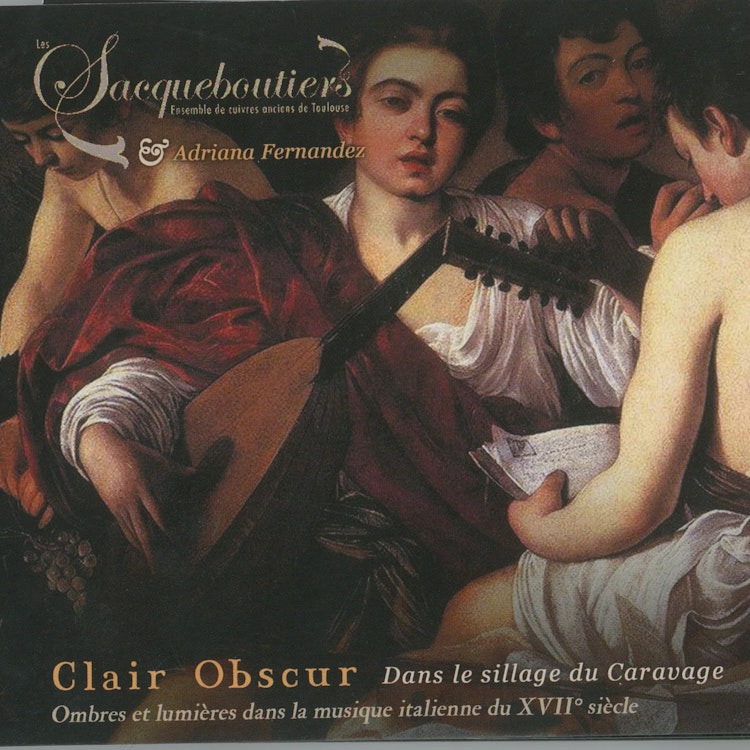
Clair obscur dans le sillage du Caravage (Ombres et lumières dans la musique italienne du XVIIe siècle)
6/15/2009, 11 Tracks, 1:09:54
Featuring
Adriana Fernández
Les Sacqueboutiers
Tarquinio Merula
Andrea Falconieri
Claudio Monteverdi
Giovanni Battista Fontana
Dario Castello
Ignazio Donati
Girolamo Frescobaldi
Did you know?
1/5
Composer's Artistic Vision
Great Italian composers of the 17th century, such as Giovanni Bassano and Antonio Brunelli, considered the Cornet and Sacqueboute to be the best instruments for imitating the human voice.
Compositional Technique
Ornamentation in 17th-century music, similar to painting and architecture, played a significant role, often taking the form of guided improvisation called 'diminutions,' as exemplified by Tarquinio Merula's 'Ciaccona'.
Compositional Technique
The Cornet and Sacqueboute were valued for their timbre and tessitura (Cornet for Soprano, Sacqueboute for Tenor) and their ability to articulate sounds, giving the illusion of speech.
Compositional Technique
The compositional technique of 'echo,' favored by many composers, benefited from the generous acoustics of Venetian churches, as seen in Ignazio Donati's 'O Gloriosa Domina'.
Historical Context
During the 17th century, with Claudio Monteverdi's invention of 'recitar cantando' (where text predominates over melody), the importance of instrumental playing imitating the voice became paramount.
You might also enjoy...
Baroque Chamber Music – Castello, D. / Marini, B. / Bertoli, G.A. / Buonamente, G.B. / Frescobaldi, G. / Turini, F.
Baroque - The Essentials
Una Notte Onirica: Musica notturna nel Seicento
Con Chitarrone - Italian sonatas from early renaissance to baroque
Telemann: Don Quixote and Other Suites & Concertos