The Dumka, a traditional Slavonic lamenting song, was adopted by Rebecca Clarke as an instrumental form, retaining its sombre mood but also featuring contrasting sections of high-flung emotions.
Composer's Artistic Vision
Rebecca Clarke's musical language, often described as English impressionism, ranges from lush post-romanticism, as heard in her Viola Sonata, to the taut neo-classicism of Stravinsky, exemplified by her Prelude, Allegro, and Pastorale.
Composition History
Rebecca Clarke's 1919 Sonata for Viola and Piano was composed for a competition sponsored by Elizabeth Sprague Coolidge, where it anonymously competed against 72 other entries.
Critical Reception
Despite being named runner-up in the 1919 competition, Rebecca Clarke's Viola Sonata has become arguably the most frequently performed major work for viola and piano, with over a dozen CD recordings.
Composer Biography
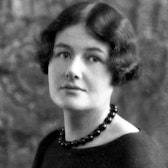
Rebecca Clarke, the composer, was born and educated in England but had strong ties to the United States through her American father, writing her best-known works during her time there.
Composer Biography
Rebecca Clarke used the pseudonym 'Anthony Trent' for her work Morpheus, which received more attention than pieces she published under her own name.