The fourth movement of "Figure Humaine" may have a personal meaning for Poulenc, as it harmonically resembles a piece by Maurice Ravel, whose work was premiered by Poulenc's mentor, Ricardo Viñes, who passed away shortly before Poulenc composed this work.
Composer's Artistic Vision
Poulenc composed "Figure Humaine" for unaccompanied choir because he wanted this "act of faith" to be performed without instrumental aid, by means of the human voice alone.
Recording & Production
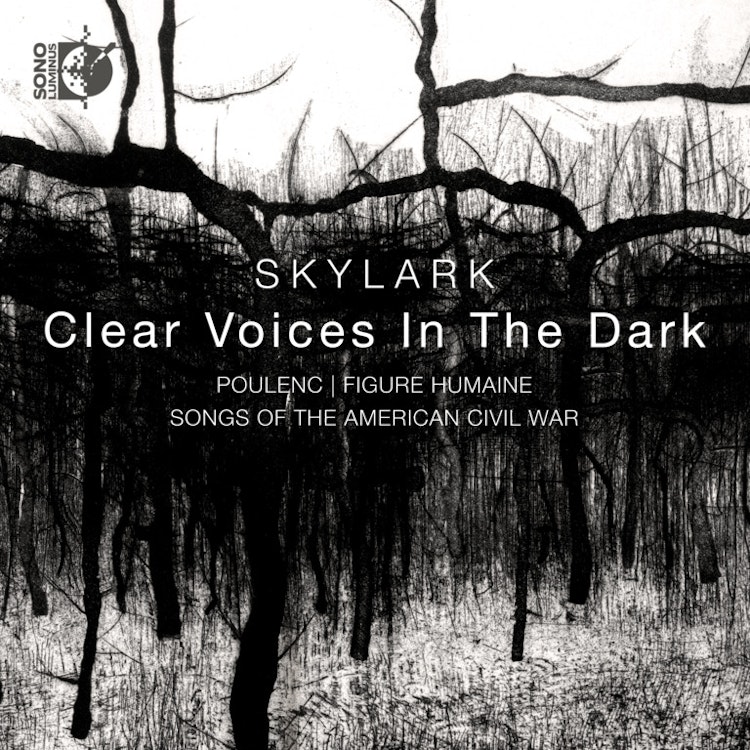
The album pairs Poulenc's "Figure Humaine" with Civil War-era songs to explore the struggles of people enduring two great wars, aiming to juxtapose the simple with the monumental.
Composition History
Francis Poulenc composed "Figure Humaine" in secret in 1943 in occupied France, inspired by resistance poems by Paul Éluard.
Performer Biography
Skylark, the chamber choir on this recording, is a three-time GRAMMY®-nominee described as "the cream of the American crop" by BBC Radio 3.
Compositional Technique
"Figure Humaine" is scored for double choir in six parts each, making it a challenging piece that requires exceptional concentration and musicianship.
Composition History
Poulenc composed the final movement of "Figure Humaine," titled "LIBERTÉ," while looking at a bell tower in the village of Beaulieu-sur-Dordogne, describing it as "so strong and so very French."
You might also enjoy...
Brahms, J.: 18 Liebeslieder Waltzes / Schumann, R.: Am Bodensee / Sommerlied / Gute Nacht
Price: Choral Works
Chamber Music (German) - Schroeder, H. / Mendelssohn, Felix / Brahms, J. (As If Distant Gardens in the Heavens Died)
Complete Part Songs for Male Voices, Vol. 5
Goethe: Klassische Vertonungen
Goethe And Music, Vol. 2 - Wolf, H. / Schubert, F. / Mozart, W.A. / Beethoven, L. Van / Schumann, R. / Brahms. J. / Liszt, F. / Mendelssohn, Felix
Turnbull: The Songs and Part-Songs
Schubert: Das geistliche & weltliche Chorwerk · Sacred & Secular Choral Works
Compositions, Vol. 2
Vaughan Williams: On Wenlock Edge . Warlock: The Curlew