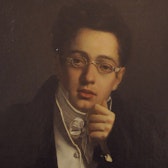
Franz Schubert, unlike Beethoven, wrote music for his contemporaries and his immediate circle of friends, rather than for posterity.
Historical Context
The piano duet genre flourished in Schubert's time, meeting the needs of a burgeoning middle-class society (Biedermeier culture) that valued music-making in private salons.
Performer Biography
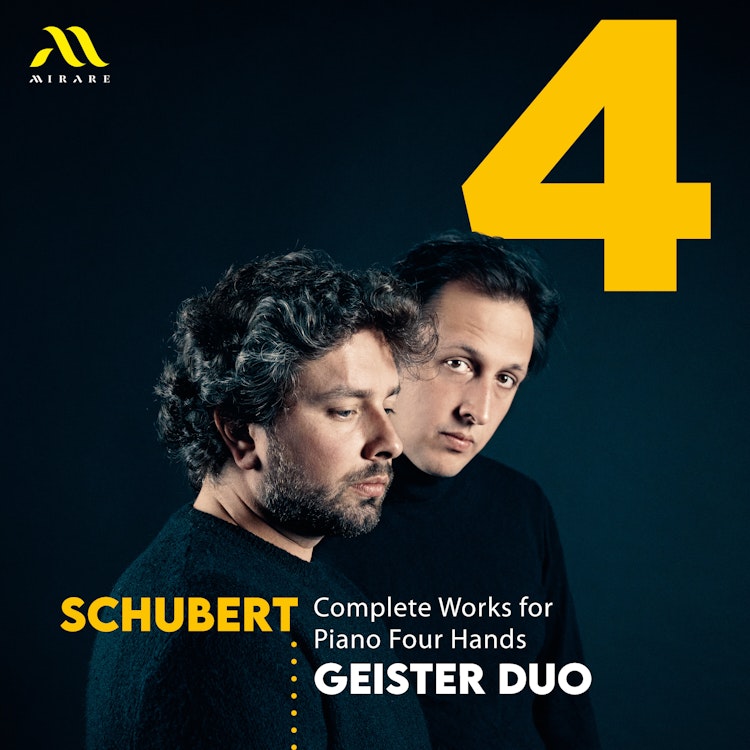
The Geister Duo, comprising David Salmon and Manuel Vieillard, won first prize at the prestigious ARD Munich International Competition in 2021, along with five special prizes.
Composer Biography
Schubert's early musical training took place at the Vienna Stadtkonvikt, a prestigious boarding school where he also occasionally conducted the orchestra from his violin chair.
Composition History
Schubert's time in Želiezovce, Hungary, where he taught piano to Count Esterházy's daughters, was a period of significant creative output for his four-hand works.
Recording & Production
This recording project, which aims to cover the entirety of Schubert's four-hand works, is a rare achievement in discography and a long-term goal for the Geister Duo.
Compositional Technique
Despite the commercial demand for lighter pieces, Schubert used popular forms like polonaises and marches to create a unique sound world, exploring keyboard ranges, tonal shifts, and poetic ornamentation.
You might also enjoy...
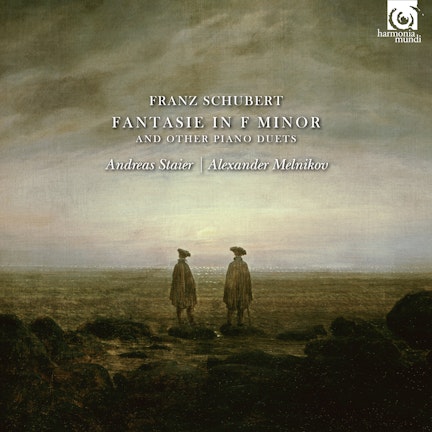
Schubert: Fantasie in F Minor and Other Piano Duets
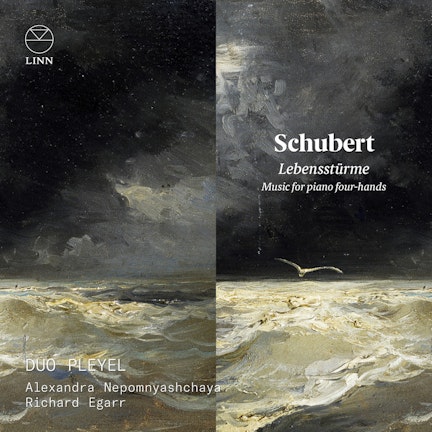
Schubert: Lebensstürme. Music for Piano Four-Hands