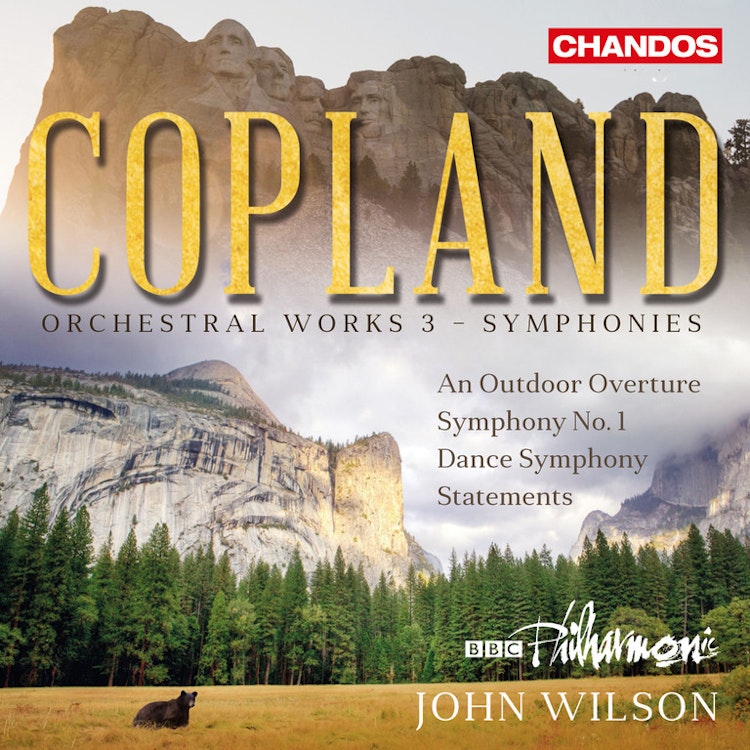
After the premiere of Copland's Symphony for organ and orchestra, conductor Walter Damrosch famously joked that if a composer could write such a work at 23, he'd be 'ready to commit murder' in five years.
Compositional Technique
Copland's Statements for orchestra is a modernist work of six concise, dissonant movements, with titles like 'Militant', 'Cryptic', and 'Prophetic'.
Critical Reception
The Dance Symphony was one of five works to win a $5,000 prize in a 1929 RCA Victor Records composition competition, but its music remained controversial, almost leading to a cancellation of a 1937 New York Philharmonic performance.
Composition History
Copland reworked his Symphony for organ and orchestra into Symphony No. 1 for orchestra alone because of the lack of venues with organs and the difficulties of synchronizing the organ with the orchestra.
Composer Biography
Copland composed his Symphony for organ and orchestra to celebrate his close friendship with Nadia Boulanger, his teacher, who gave its eagerly anticipated American debut performance in 1925.
Composition History
Aaron Copland's Dance Symphony originated as a ballet titled Grohg, based on a grotesque vampire theme, but it was never fully staged or performed in concert during his lifetime.
Composition History
The initial inspiration for Copland's ballet Grohg came from F.W. Murnau's influential expressionist film Nosferatu: Eine Symphonie des Grauens, which Copland and Harold Clurman saw in Paris in 1922.