Georg Muffat, a composer who studied with Corelli in Rome, described Corelli performing concerti grossi "with the greatest exactitude by a large number of players," suggesting a fruitful exchange of ideas between the two composers.
Critical Reception
Corelli's concertos were so highly regarded that Charles Burney wrote in 1789 that they "seem to have withstood all the attacks of time and fashion" and were "so majestic, solemn and sublime that they preclude all criticism."
Composition History
Corelli's Concerti Grossi, Op. 6, were not published during his lifetime; his favorite pupil Matteo Fornari dedicated and published them in 1714.
Composer Biography
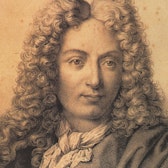
Arcangelo Corelli, the composer of these Concerti Grossi, was born in 1653, 32 years before Bach and Handel, and six years before Purcell.
Interpretation
The performers on this recording paid particular attention to contemporary bowing styles and 17th-century evidence regarding tempi and phrasing, as Corelli was known to insist on unanimity of bowing.
Compositional Technique
Corelli's Twelve Concerti Grossi, Op. 6, are divided into two groups: Nos. 1-8 are 'da chiesa' (church concertos) without dance movements, and Nos. 9-12 are 'da camera' (chamber concertos) which include standard suite dances.
You might also enjoy...
Corelli: Concerti Grossi Opus 6
Corelli: 12 Concerti Grossi Op.6
Corelli: Concerto Grosso No.10 in C major Op.6
Corelli: Concerti grossi, Op.6
Corelli: Concerti grossi Op. 6, 1-6
Corelli: Concerti Grossi, Op. 6, Nos. 1-6
Corelli: Concerti Grossi, opus 6 - Baroque Esprit Series