Cardinal Pietro Ottoboni, Corelli's patron, established his residence in the magnificent Palazzo della Cancelleria, which became a center of artistic patronage in Rome for five decades.
Compositional Technique
Corelli's Op. 4 sonatas often begin with a slow Preludio, a characteristic that became an essential attribute of the suite due to the popularity of these works.
Composer's Artistic Vision
Corelli's music was considered a model of perfection, with the theorist Antimo Liberati proclaiming his style "full of every loveliness and beauty that can issue from the mind of man."
Composer Biography
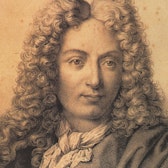
Arcangelo Corelli, the composer, lived in the Palazzo della Cancelleria for the rest of his life after moving in with his companion Matteo Fornari in April 1690.
Composition History
Corelli's Op. 4, a collection of twelve trio sonatas, was presented in 1694 as a gesture of gratitude to Cardinal Ottoboni, his patron.
Recording & Production
The recording uses the first edition of Corelli's Op. 4 from 1694 as its source, avoiding later editions that contain inaccuracies and non-original figured bass.
Interpretation
This recording uses a pitch of a' = 400 Hz, which aligns with the Roman diapason of Corelli's time, about a tone lower than the Venetian diapason (a' = 440 Hz).