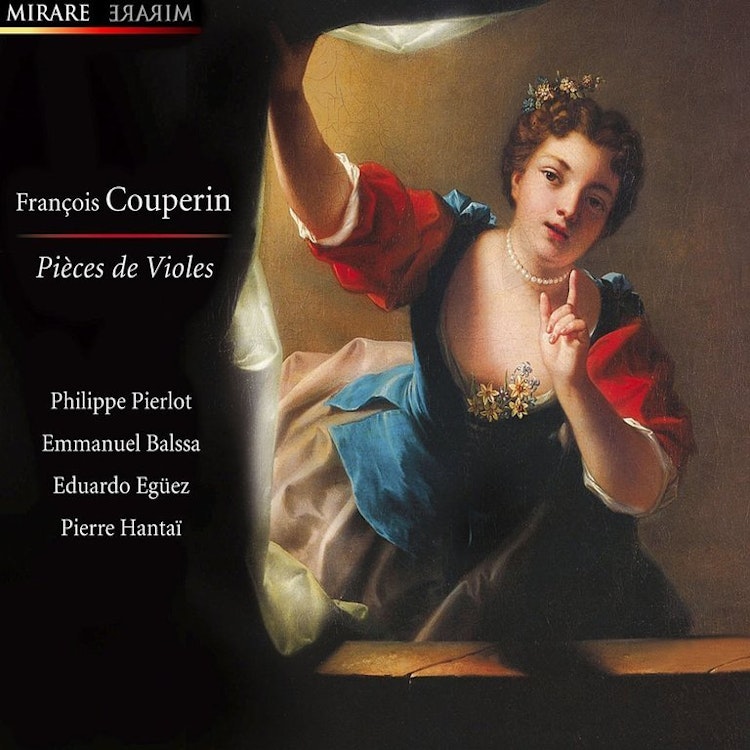
The 'Pompe Funèbre' might be a 'tombeau' (a musical elegy) for Marin Marais, a prominent French viol player and composer, who died in August 1738, the same year Couperin's pieces were published.
Performer Biography
Philippe Pierlot, the conductor and viol player on this album, is one of the few performers who plays the baryton, a rare instrument for which Haydn composed nearly 150 works.
Composition History
Couperin's Pièces de Violes were long believed lost until Charles Bouvet discovered a copy in the Bibliothèque Nationale, published anonymously with only the initials F.C.
Instruments
From around 1675, the French viol, notably by Sainte-Colombe, was equipped with a seventh string tuned in A, extending its range to over three and a half octaves.
Compositional Technique
Couperin's 'Pompe Funèbre' is considered the quintessence of the Baroque funeral service, combining ceremonial procession and meditation on death with simple harmony and few dissonances.
Compositional Technique
The French viol tradition, unlike English or German, focused on polyphony and featured a virtually flat bridge and fretted fingerboard to facilitate playing multiple strings and chords.
Composer's Artistic Vision
Couperin's two Suites for viol are intended for late-evening listening, in silence, when things begin to take on their full weight.
You might also enjoy...
Handel: Water Music Suites; Music for the Royal Fireworks
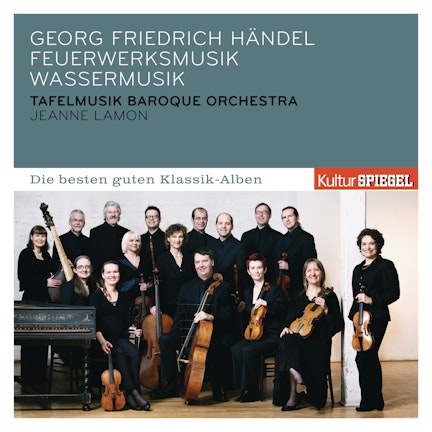
Händel: Wassermusik, Feuerwerksmusik
Handel: Water Music Suites Nos. 1-3
Handel, G.F.: Water Music / Music for the Royal Fireworks
Handel: Water Music; Fireworks Music
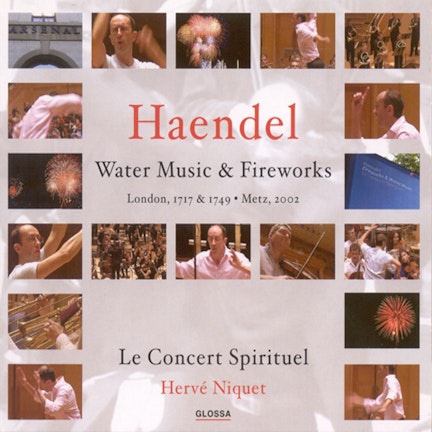
Haendel: Water Music & Music For The Royal Fireworks
Telemann: Suites in G Major, E Minor, and E Major
Les soupers du roy
Khachaturian, A.I.: Spartacus, Suites Nos. 1- 3
Handel: Water Music Suites; Music For The Royal Fireworks