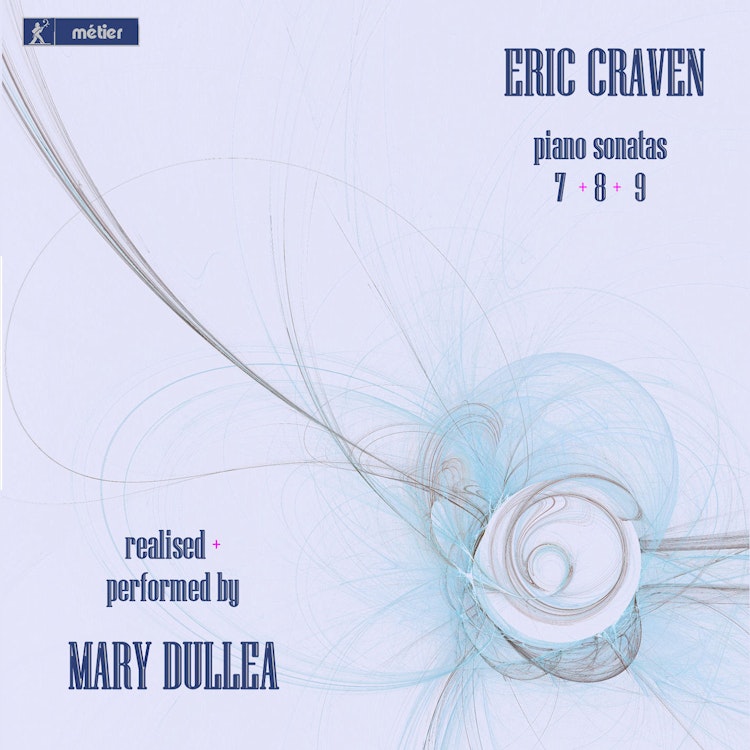
Craven's non-prescriptive notation comes in three types: Low-order (LoNP) with fully written pitches and rhythms but no dynamics or tempo; High-order (HoNP) with only notes and chords, no rhythm, and allowing reordering; and Middle-order (MoNP) which uses short, disconnected fragments with pitches and rhythms that can be reordered.
Composer's Artistic Vision
Craven describes his notation as 'data' that acts as an 'opening-gambit' to push the performer towards a musical response they discover through playing, rather than being the piece itself.
Composer's Artistic Vision
Eric Craven's non-prescriptive notation allows various levels of freedom for the performer, removing specificity to afford different paths and trajectories.
Composer Biography
Eric Craven, the composer, has taught music and maths in secondary schools in Manchester and has rarely sought to introduce his music to a wider audience until recently.
Composer's Artistic Vision
Craven's approach to non-prescriptive music is rooted in the freedoms of Jazz performance and improvisation, where a given tune is used as data to craft something new.
Performer Biography
Mary Dullea, the pianist on this album, is an Irish pianist who performs internationally and is a sought-after interpreter of new music, with many 20th- and 21st-century compositions dedicated to her.
You might also enjoy...
Somni d'un poeta
Nin, J.: Piano Music
Daniel Pinkham: Piano Music
From My Window: Five New Works for Piano by Joseph Fennimore