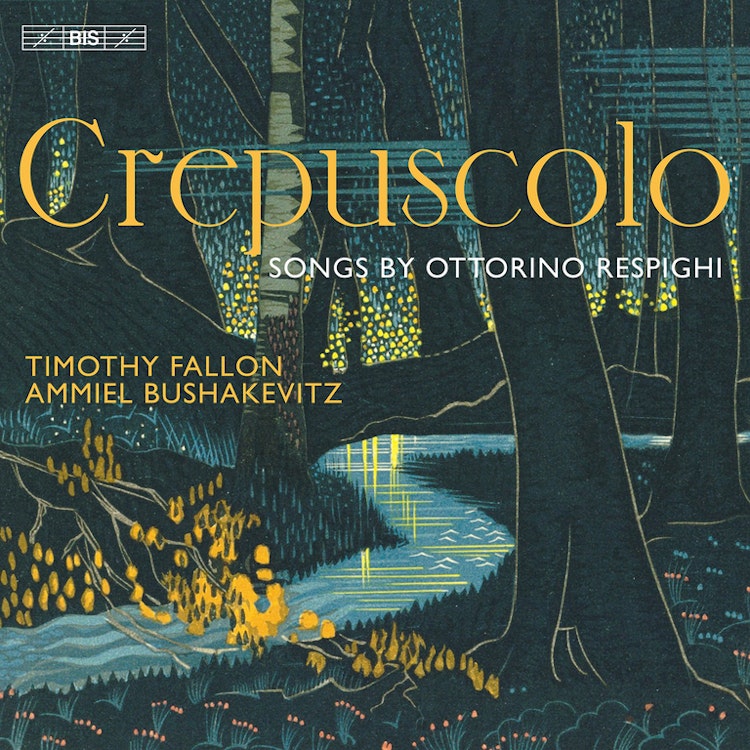
Timothy Fallon, the tenor on this album, is a Grammy Award recipient and the 2013 first prize winner of the Wigmore Hall/Kohn Foundation International Song Competition with pianist Ammiel Bushakevitz.
Historical Context
Despite his 'Roman Trilogy' being admired by Mussolini, Respighi remained apolitical and actively opposed the Fascist regime by intervening to help his friend, conductor Arturo Toscanini, whose passport was confiscated for refusing to conduct the Fascist anthem.
Compositional Technique
Respighi's songs demonstrate a wide range of musical influences, from German Late Romanticism to Italian bel canto and French styles like Debussy and Ravel, leading to diverse styles including operatic, expressionist, and impressionist.
Compositional Technique
Respighi's love for Gregorian chant is evident in his vocal lines, which avoid large leaps and reflect the style of fin-de-siècle French mélodie composers like Fauré, Debussy, and Ravel.
Composer's Artistic Vision
Respighi was an 'early music specialist' before the term existed, showing admiration for bygone eras and composers like Frescobaldi, Gallot, Monteverdi, Pergolesi, and Rameau, whom he transcribed and edited.
Composer Biography
Respighi's 'Roman Trilogy' of orchestral works (Fountains of Rome, Pines of Rome, Roman Festivals) has overshadowed his extensive compositional output, particularly his vocal works, for which the human voice was very important.
Composer Biography
Ottorino Respighi, born in 1879 in Bologna, came from a family of musicians and sculptors and was instilled with a deep respect for history and Renaissance tradition.