Cyril Scott's flexible rhythms and avoidance of conventional cadences in the Sonata are linked to his aim of achieving a constant musical flow, which had mystical implications for him.
Composer's Artistic Vision
Cyril Scott's writings and music are deeply invested in mysticism and the occult, which helps to appreciate his music on its own terms.
Composition History
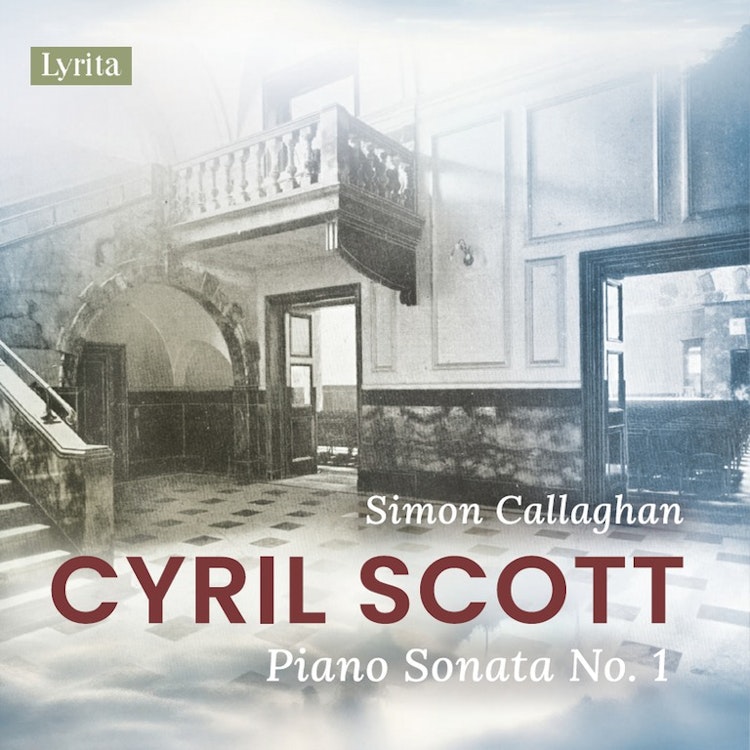
Cyril Scott's Piano Sonata Op. 66 was considered by him to be his first important piano work, and a friend had to pay for its engraving to persuade the publisher Elkin to release it.
Compositional Technique
The Piano Sonata Op. 66 by Cyril Scott combines elements of French and Russian schools with chromatic harmony and a Straussian élan, and its most distinctive feature is the constant changing of time signature.
Composer Biography
Cyril Scott, the composer, studied piano and composition in Frankfurt with Lazzaro Uzielli, a pupil of Clara Schumann, and Iwan Knorr.
Performer Biography
Simon Callaghan has a strong commitment to British music and has recorded world premieres of British concertos and complete piano music by Rebecca Clarke, George Dyson, and William Busch.
Performer Biography
Simon Callaghan, the pianist on this album, performs internationally as a soloist and chamber musician and is a founding member of the London Piano Quartet.
You might also enjoy...
Orient / Occident
Janácek: Piano Music
Mompou: Música Callada
George Crumb: Metamorphoses, Book I
Fredrik Schwenk: Sieben Neue Kinderszenen für Klavier
Crumb: Makrokosmos I and II
Mompou: Musica Callada, Vol. 2: XV. Lento plaintif