Dallapiccola decided to become a composer after hearing Richard Wagner's 'The Flying Dutchman' in Graz and later absorbed the influence of Claude Debussy.
Historical Context
Dallapiccola's family was interned in Graz during World War I due to nationalist paranoia, suspected of political subversion.
Historical Context
Dallapiccola initially supported Mussolini but turned against him during the Abyssinian colonial war and the Fascists' support for the systematic destruction of Jews, which personally affected him as his wife, Laura Luzzatto, was Jewish.
Compositional Technique
Dallapiccola, fascinated by Anton Webern and Alban Berg, developed his own unique approach to twelve-tone technique, retaining strong diatonic links and lyrical naturalness.
Composer's Artistic Vision
Dallapiccola expressed his political stance passionately in a triptych of works: 'Canti di prigionia', the opera 'Il prigioniero', and 'Canti di liberazione'.
Performer Biography
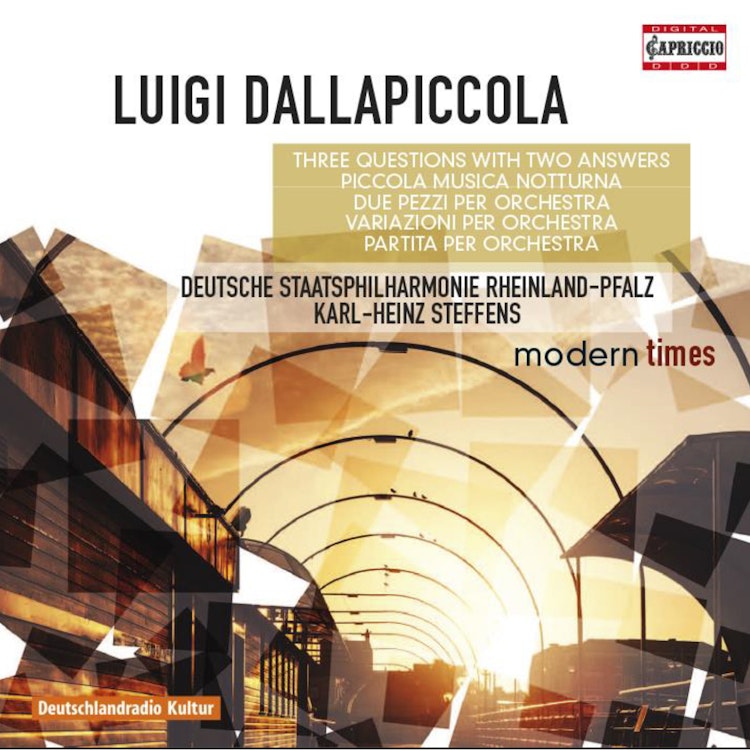
Karl-Heinz Steffens, the conductor, was formerly the solo clarinettist of the Berlin Philharmonic before becoming a General Music Director and principal conductor.
Composer Biography
Luigi Dallapiccola, born in 1904, was considered the most significant and successful Italian composer of the second generation of Modernism.
You might also enjoy...
Corigliano / Harbison / Hersch / Kernis / Kolb: American Orchestral Works
TAKEMITSU: Orchestral Works
Maderna: Quadrivium
Maderna: Quadrivium; Aura; Biogramma
Szymanowski Reimagined
Maderna: Quadrivium; Aura; Biogramma
Schwertsik: Baumgesänge - Nachtmusiken - Herr K entdeckt Amerika
Griffes: Pleasure Dome of Kubla Khan / The White Peacock
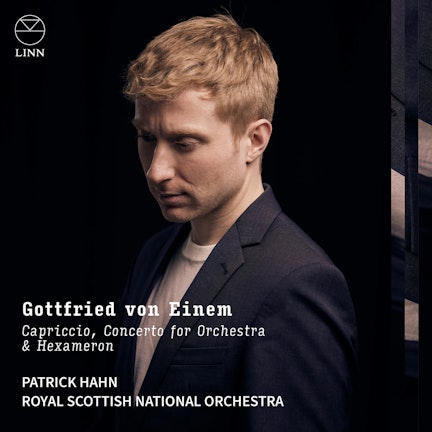
Gottfried von Einem: Capriccio, Concerto for Orchestra & Hexameron
Grainger: Grainger Edition, Vol. 1: Orchestral Works
Messiaen: Concert à quatre / Les Offrandes oubliées / Le Tombeau resplendissant / Un Sourire
Bonis: Orchestral Works
Lutoslawski: Concerto for Cello and Orchestra - Livre pour orchestre - Novelette - Chain No. 3