L'Estocart's originality went largely unrecognized by his contemporaries, and his works, including the Sacræ Cantiones, faced limited distribution and were almost lost until the mid-20th century.
Interpretation
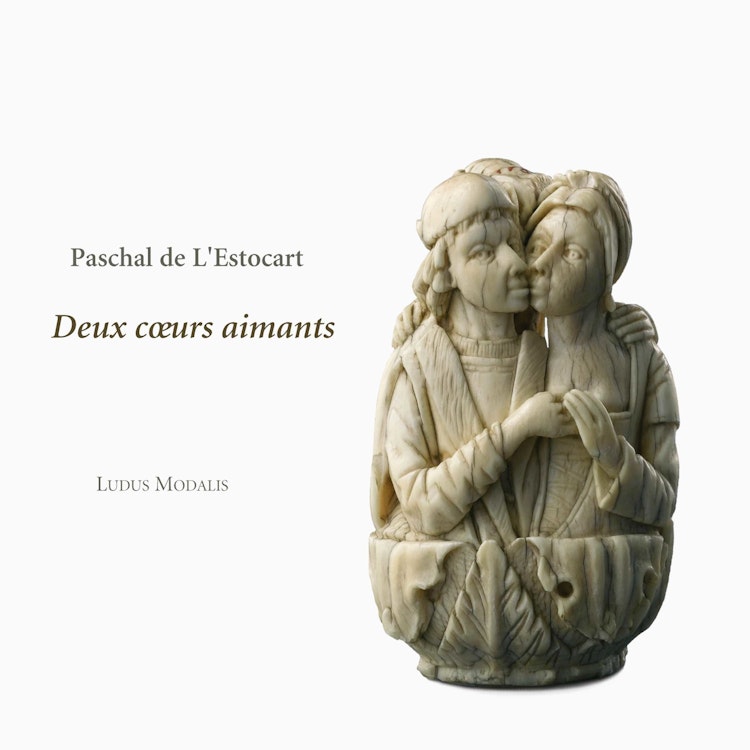
The ensemble Ludus Modalis chose an a cappella performance for this recording, believing it best reflects the Renaissance composers' concept of striving for perfect purity of intervals.
Compositional Technique
L'Estocart's musical language, influenced by Lassus, employs a wide range of compositional techniques, from imitative counterpoint to homorhythmic chordal writing, to serve textual expression.
Compositional Technique
A notable aspect of L'Estocart's music is its harmonic boldness, which creates striking clashes through voice-leading, as observed in the final section of "Inter natos" on the word "mulierum."
Composer Biography
Very little is known about Paschal de L'Estocart, a French composer born around 1537 in Noyon, Picardie, with only scattered records of his life.
Composition History
L'Estocart's four known musical cycles, including the Sacræ Cantiones on this album, were published in 1582 in Lyon and Geneva, suggesting his ambition to create coherent, large-scale works.
Historical Context
L'Estocart's sympathies for the Reformation likely led him to settle in Calvinist territory, Switzerland, where he could publish his works in its active printing centers like Geneva.
You might also enjoy...
Alexander Agricola: A Secret Labyrinth
The Ear of the Huguenots
Firminus Caron - Twilight of the Middle Ages
Vocal Music - Past and Present Reflections of the Marian Inspiration