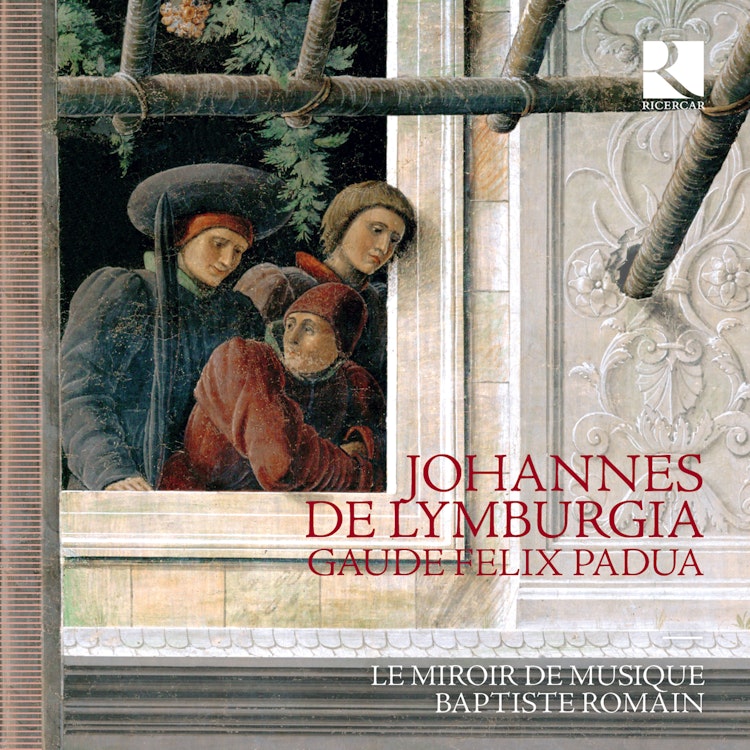
Johannes de Lymburgia, the composer featured on this album, is considered one of the major composers of church music in the first half of the 15th century, with around fifty compositions attributed to him.
Compositional Technique
The motet Gaude felix Padua by Johannes de Lymburgia was considered illegible until Julia Craig-McFeely and Margaret Bent used digital techniques and their knowledge of the repertoire to transcribe it.
Composer Biography
Johannes de Lymburgia's life and career are somewhat mysterious, with records suggesting he may have been active in both Liège and Italy, possibly holding ecclesiastical positions in both regions.
Composition History
The Q15 manuscript in Bologna, which contains 46 pieces by Johannes de Lymburgia, was compiled in Vicenza between 1430 and 1435.
Critical Reception
Despite leaving a significant body of work, Johannes de Lymburgia has been largely forgotten, and this album aims to contribute to his rediscovery and reinstatement.
Compositional Technique
Johannes de Lymburgia's Magnificat, the only four-voice Magnificat of its generation, is noted for its sonic exploration, using highly dissonant harmonic sequences and a daring juxtaposition of functional harmonies.
Historical Context
The Q15 manuscript is a crucial source for understanding music in Northeast Italy in the early 15th century, encompassing works from Northern Europe, Venice, and England.