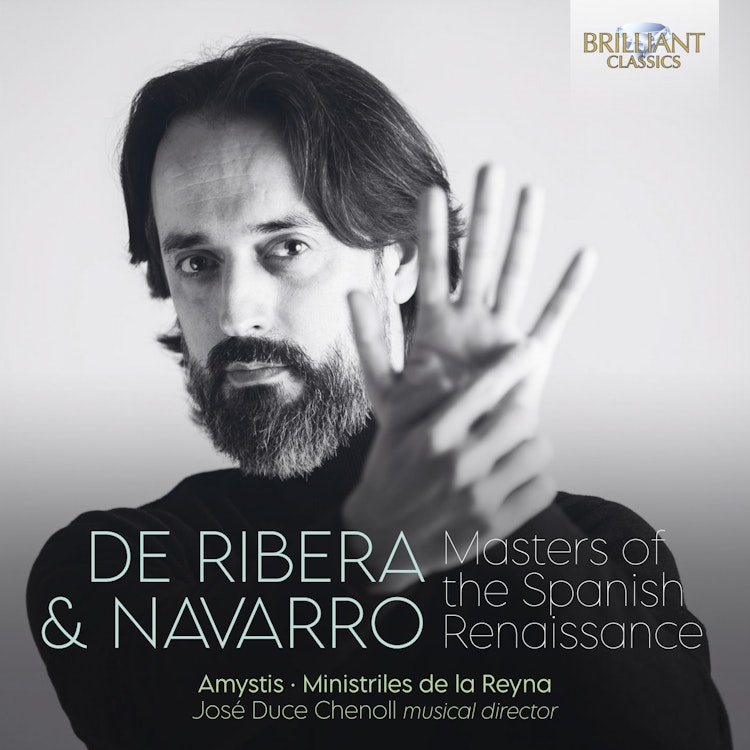
De Ribera & Navarro: Masters of the Spanish Renaissance
2/25/2022, 12 Tracks, 48:24
Featuring
José Duce Chenoll
Amystis Choir
Ministriles de la Reyna
Bernardino de Ribera
Juan Navarro Hispalensis
Sebastián De Vivanco
Tomás Luis de Victoria
Did you know?
1/7
Interpretation
The recording aims for a realistic, 'unsweetened' sound, embracing potential noises from historical instruments and respecting Spanish pronunciation of the sacred texts to convey the spirituality of 16th-century Spain.
Composition History
The album focuses on the music of Bernardino de Ribera and Juan Navarro, who were the most influential teachers of Tomás Luis de Victoria, a major Spanish Renaissance composer, during his youth at Ávila Cathedral.
Album & Artwork
The album cover features the 'Guidonian Hand', a historical teaching tool used to instruct children and choirs in musical pitches, symbolizing the album's focus on the educational role of chapel masters.
Recording & Production
The Santiago Codex, an early 17th-century manuscript from the Parish of Santiago in Valladolid, is a primary source for this album and features music by Juan Navarro that had not been previously recorded.
Composition History
Sebastián de Vivanco, another composer featured on this album, was a childhood friend of Tomás Luis de Victoria, as they both served as boy singers at Ávila Cathedral.
Historical Context
Boy singers, or 'seises', in Spanish cathedrals lived with the chapel master, who was responsible for teaching them music, as well as providing for their food, health, clothing, and education in letters and numbers.
Composer's Artistic Vision
The album aims to highlight lesser-known Spanish Renaissance masters who contributed to the 'musical fabric' of their time, beyond the most famous figures.
You might also enjoy...
F. A. Baseo: Il primo libro dei Madrigali a cinque voci (Venezia, 1582)
Messe de requiem: Sanctus
Daser: Missa Pater noster: IV. Sanctus: a. Sanctus