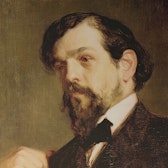
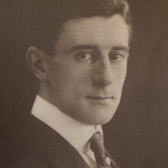
Ravel distinguished his Quartet from Debussy's by stating that his own was conceived as four-part counterpoint, while Debussy's was purely harmonic.
Critical Reception
Debussy's Quartet was initially met with reservations due to its novelty, but later achieved great success at a Brussels concert where it was performed in an art gallery.
Compositional Technique
Debussy's String Quartet radically renewed the genre's aesthetics through its focus on timbre and color, such as the use of pizzicatos in the scherzo.
Composition History
Ravel's String Quartet, completed in 1903, was dedicated to his composition teacher Gabriel Fauré, who reportedly did not appreciate the work.
Recording & Production
Ravel supervised a recording of his Quartet in 1927, annotating the score to ensure his desired articulation and tempo, believing composers could now definitively convey their interpretations.
Historical Context
In 1880, French composers struggled to have their chamber music performed, as concert societies preferred established masters like Beethoven and Mozart.
Composition History
The Société Nationale de Musique, founded by Saint-Saëns and friends in 1871, was crucial for the creation and performance of new French chamber music, including the premieres of Debussy's and Ravel's quartets.
You might also enjoy...
Ravel / Janacek: Dawn To Dusk
Ravel & Debussy: String Quartets
Debussy & Ravel: String Quartets
Debussy: String Quartet in G Minor, Op. 10, L. 85 - Ravel: String Quartet in F Major, M. 35
Borodin Quartet Performs String Quartets
Debussy: String Quartet in G minor / Ravel: String Quartet in F
Debussy: String Quartet In G Minor, Op. 10 / Ravel: String Quartet In F Major
Debussy & Ravel: String Quartets
Debussy: String Quartet in G Minor - Ravel: String Quartet in F Major