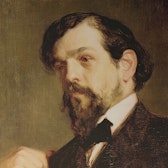
Claude Debussy believed in a 'mysterious collaboration between the air, the movement of leaves, the smell of flowers… and music,' emphasizing nature's ineffable feelings.
Compositional Technique
Liszt's Consolations, subtitled 'Poetic Thoughts,' focus on spiritual states and melancholic density rather than his usual virtuosity.
Compositional Technique
Unlike Bach or Chopin, the logic of Debussy's Préludes is based on 'the mysterious correlations between Nature and Imagination,' rather than the tonal scale.
Interpretation
Pianist Philippe Guilhon-Herbert's choice to play Rameau on a piano instead of a harpsichord highlights the orchestral dimension of Rameau's music.
Composer's Artistic Vision
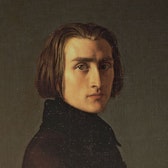
For Franz Liszt, nature was an ally in expressing 'the intimate and poetic sense of things,' stirring profound emotions that he conveyed through music.
Composer's Artistic Vision
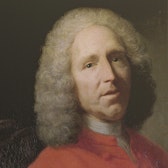
Jean-Philippe Rameau's musical thinking, like Descartes's philosophy, sought to reduce harmony to its natural principles, treating music as a system of laws.
Compositional Technique
Debussy's Préludes are not programmatic but use evocative titles as pretexts for invention, exploring sound fields and widening musical horizons.