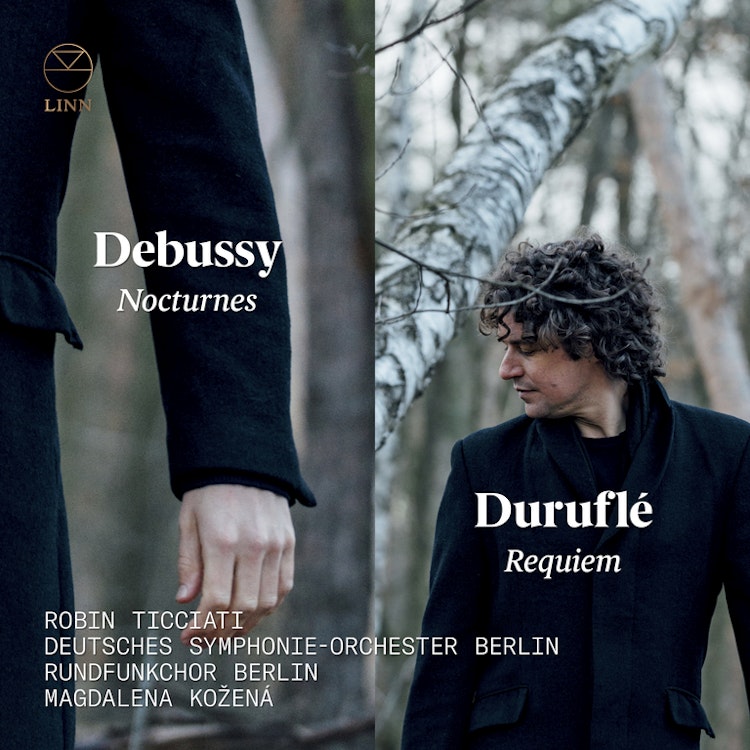
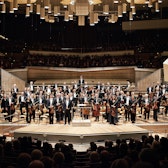
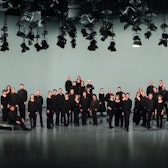
Robin Ticciati, the conductor, has been Music Director of the Deutsches Symphonie-Orchester Berlin since 2017 and of the Glyndebourne Festival Opera since 2014.
Recording & Production
This album was recorded in Berlin, Germany, from March 19-22, 2019, as a co-production with Deutschlandfunk Kultur.
Compositional Technique
Each of the nine movements of Duruflé's Requiem is based on the proper Gregorian chant for the text, serving as a starting point for rich developments.
Composer Biography
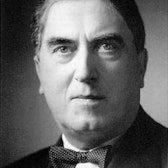
Maurice Duruflé, a church musician, served as organist at Saint-Étienne-du-Mont in Paris for 57 years until his death in 1986.
Composition History
Duruflé's Requiem was commissioned by the Vichy government in 1941 as a symphonic poem, but he chose to write a choral work with orchestra, completing it in 1947.
Compositional Technique
Debussy's Nocturnes, composed between 1897 and 1899, developed his preferences for fluid rhythm and ambiguous harmony on a large orchestral scale.
Composer's Artistic Vision
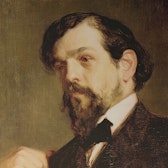
Claude Debussy reacted strongly against classical harmony and form rules, seeking inspiration from Russian nationalists, French harpsichord music, Javanese gamelan, and Roman Catholic plainsong.
You might also enjoy...
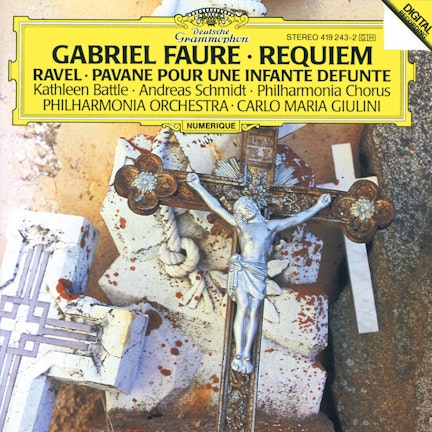
Fauré: Requiem / Ravel: Pavane pour une infante défunte
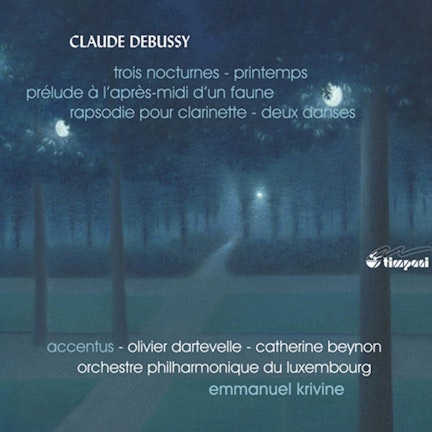
Debussy: Trois nocturnes - Printemps - Prelude a l'apres-midi d'un faune - Rapsodie pour clarinette - Deux danses
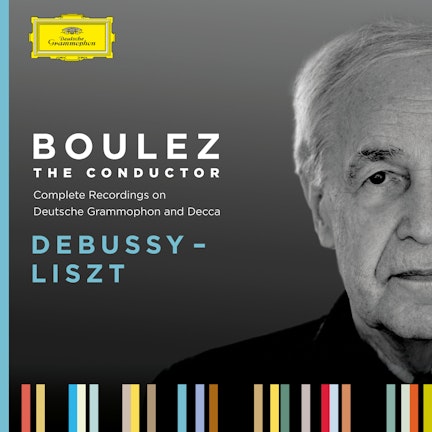
Boulez A-Z: Debussy - Liszt
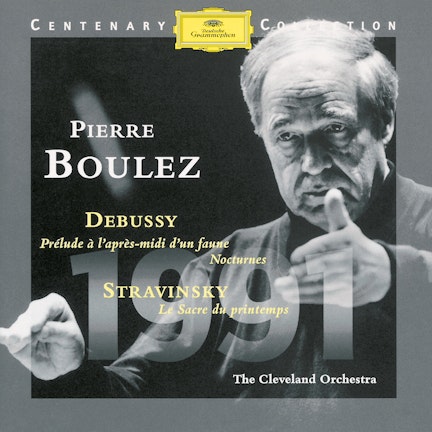
1991 - Pierre Boulez
Fauré: Requiem, Pavane . Duruflé: Requiem
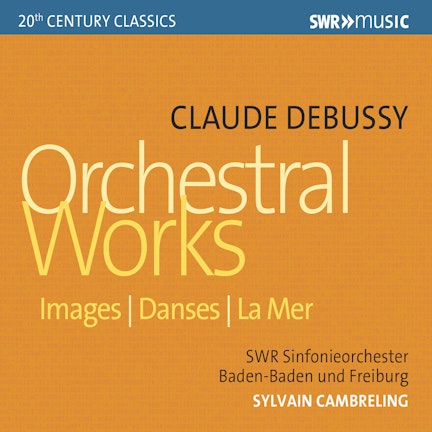
Debussy: Images, Danses sacrée et profane & La mer
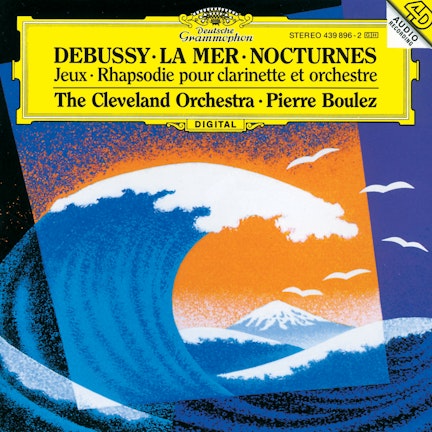
Debussy: Nocturnes; Première Rhapsodie; Jeux; La Mer