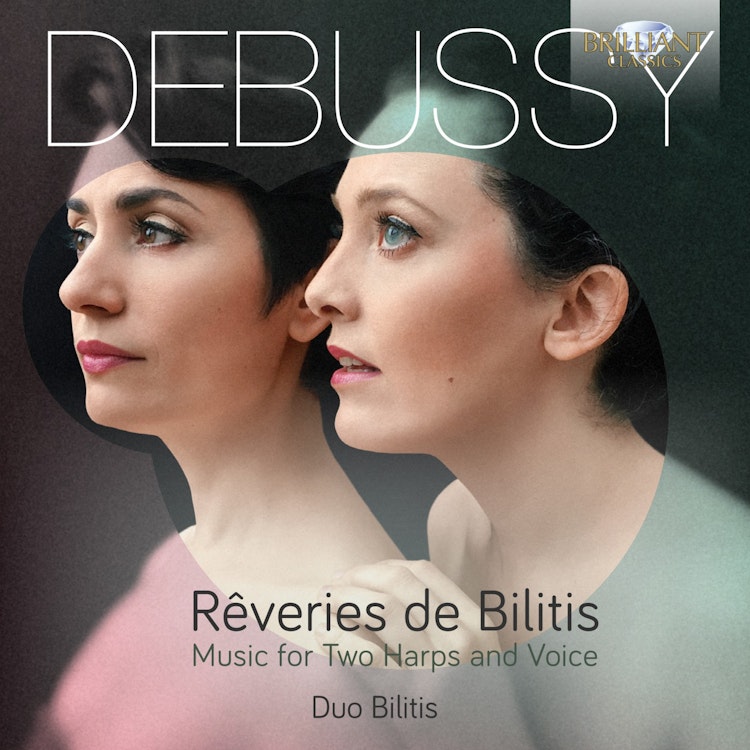
Debussy: Reveries de Bilitis Music for Two Harps and Voice
4/1/2018, 16 Tracks, 59:05
Featuring
Eva Tebbe
Ekaterina Levental
Duo Bilitis
Claude Debussy
Did you know?
1/7
Composer Biography
Debussy's Ballade, originally titled Ballade Slave, shows his fascination with Russian music, stemming from summers spent in Russia at the invitation of Tchaikovsky's patron, Nadezhda Von Meck.
Composition History
Most works on this album were created around the same time Debussy was working on his only opera, Pelléas et Mélisande, based on a play by Belgian symbolist Maurice Maeterlinck.
Performer Biography
Duo Bilitis, consisting of harpists Eva Tebbe and Ekaterina Levental, is known for their unique lineup, captivating programs, and intense interplay, performing in venues worldwide.
Composer's Artistic Vision
Claude Debussy believed that music should make the invisible visible and transform the unspeakable into a musical world full of mysticism and evocative meanings.
Historical Context
Pierre Louÿs's claim that the Bilitis poems were ancient Greek translations fooled experts, leading to a scandal when he admitted he was the true author.
Composition History
The texts for Debussy's Trois Chansons de Bilitis were written by his close friend, the poet Pierre Louÿs, who initially claimed they were translations of ancient Greek poems by Bilitis.
Composition History
Debussy's Proses lyriques is his first song cycle based on his own texts, which were inspired by his symbolist contemporaries.