Ravel's Second Sonata for violin and piano, his last piece of chamber music, showcases his obsession with orchestration, making the piano sound like vibraphones and the violin like a flute or muted trumpet.
Compositional Technique
Szymanowski's 'Myths' for violin and piano, composed in 1915, explores the instruments' possibilities, transforming the violin into sounds like a bird, a gong, or Pan Pipes.
Interpretation
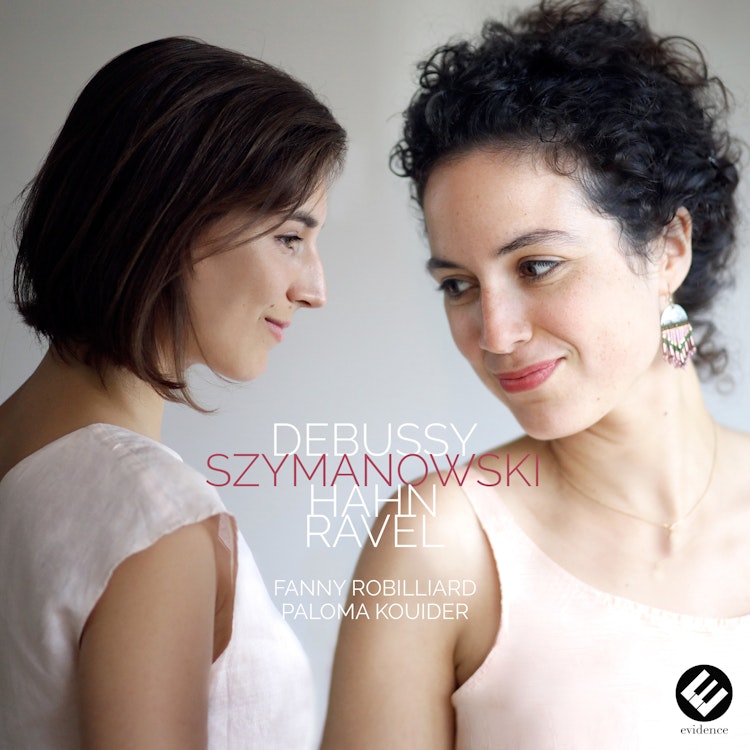
The duo Fanny Robilliard and Paloma Kouider aimed to highlight the importance of silence and the 'unsayable' in their interpretations of these post-Romantic pieces.
Composer's Artistic Vision
Debussy's final sonata, written a year before his death in 1918, was considered by him to be a 'requiem' and dedicated to 'those who can read between the staves'.
Composition History
It took Ravel five years to complete his sonata for violin and piano, instruments he considered 'essentially incompatible'.
Performer Biography
Fanny Robilliard, the violinist on this album, grew up in a musical family where discussions often revolved around beloved works, neglected composers, or new scores.
Composition History
Szymanowski believed that his 'Myths' and Violin Concerto, created with violinist Pavel Kochanski, established a new style and way of playing the violin that influenced later composers.
You might also enjoy...
Invocation
Sonatas for Violin and Piano
Huella
Schumann Collection: Violin Works
Weber: 6 Violin Sonatas
Langgaard: Violin Sonatas
Listen! Hear Her Voice: Music By Women
Violinsonaten: Franck, Grieg, Brahms - Markus Wolf, Julian, Riem
Couleurs des Amériques
Un violon à Paris
Korngoldmark – Korngold, R. Goldmark & K. Goldmark: Works for Violin and Piano