Maurice Ravel, a French composer, admired Debussy's 'Prélude à l'après-midi d'un faune' so much that he wished it to be played at his own funeral.
Instruments
Debussy's 'Danse sacrée et danse profane' was commissioned by the Parisian firm Pleyel to popularize the chromatic harp, an instrument invented by Gustave Lyon that eliminated the need for pedals.
Historical Context
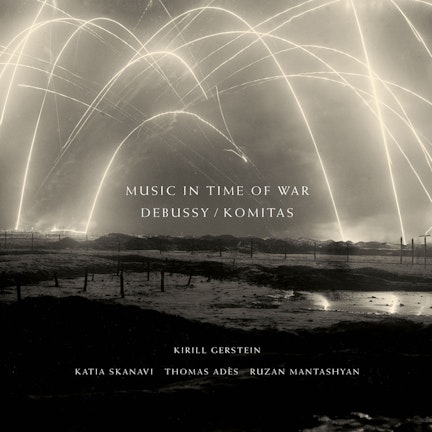
The First World War profoundly affected Debussy, almost silencing him as a composer, and his 'En blanc et noir' pieces reflect his preoccupation with the war.
Composition History
Debussy's 'Prélude à l'après-midi d'un faune' was initially conceived as incidental music for a theatrical presentation of Stéphane Mallarmé's poem.
Composition History
Debussy's 'Trois Nocturnes' were originally planned for solo violin and orchestra, with the composer intending to experiment with different instrumental combinations like a painter studying shades of grey.
Composition History
Debussy's 'Lindaraja', his first piece for two pianos and his first characteristically Spanish work, was not published until eight years after his death.
Composer's Artistic Vision
Debussy described his 'En blanc et noir' pieces as being like the 'greys of Velazquez', and each is headed by a quotation.
You might also enjoy...
Debussy: 12 Études pour le Piano, L. 136
Clair de lune (Debussy)
Debussy: 12 Études - Piano Music, Vol. IV
Debussy 12 Etudes
Debussy: Suite bergamasque
Debussy: Études
12 Études, Deuxième Livre, L. 136: XI. Pour les arpèges composés
Ma mère l'Oye, M. 60: III. Laideronnette, impératrice des pagodes