James Elroy Flecker, the author of the play 'Hassan', studied Middle Eastern languages and developed an interest in Islamic culture while posted to Constantinople in the Ottoman Empire as part of the consular service.
Critical Reception
The London premiere of Delius's 'Hassan' on September 20, 1923, was a critical sensation, with Delius himself writing excitedly to his publisher that the press was "marvellously favourable."
Composition History
Frederick Delius initially claimed he was not interested in composing for plays, despite having written six operas previously, before being persuaded to compose the incidental music for 'Hassan'.
Compositional Technique
A sighing melismatic arpeggio acts as a recurrent motto, or idée fixe, in Delius's 'Hassan', symbolizing longing, rapture, and release from earthly pain.
Recording & Production
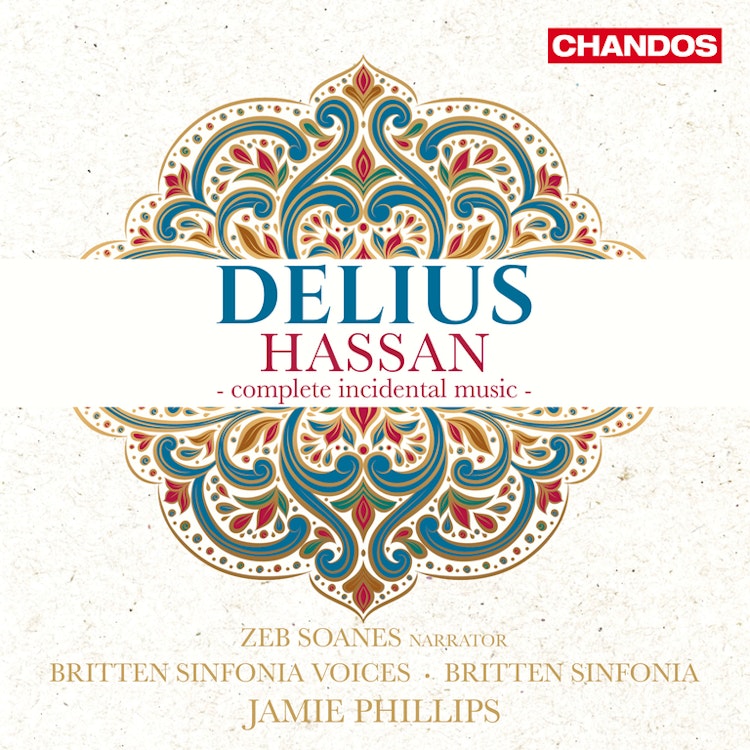
This Chandos recording of Delius's 'Hassan' was made using 24-bit / 96 kHz technology, which offers a dynamic range up to 48 dB greater and 256 times the resolution of standard 16-bit recordings.
Composer's Artistic Vision
Delius's music for 'Hassan' uses a smaller ensemble of fewer than thirty musicians, a departure from his earlier works that often employed a Mahler-sized orchestra, due to the physical limitations of the theatre pit.
Composition History
Due to delays and complex scene changes, Delius's close friend, the Australian pianist-composer Percy Grainger, anonymously contributed an additional ballet movement, the 'General Dance', to Delius's score for 'Hassan'.
You might also enjoy...
Pacius: Princess of Cyprus (The) - Incidental Music To the Play by Zacharias Topelius
Tchaikovsky: The Nutcracker, Op. 71, TH 14 (Excerpts Arr. for Brass Septet & Percussion)
Le Martyre de Saint-Sébastien
Orff: Ein Sommernachtstraum
The Soldier's Tale (Narrated by Roger Waters)
Cyrano de Bergerac: L'autre monde, ou les estats & empires de la Lune