Die Ladegast-Orgeln, Vol. 4: Die Ladegast-Orgel im Dom zu Schwerin
6/2/2015, 15 Tracks, 1:16:28
Featuring
Jan Ernst
Gabriel Henri Constant Pierné
Théodore Dubois
Eugène Gigout
Max Reger
George Frideric Handel
Otto Dienel
Charles Villiers Stanford
Ernst Richter
Johann Sebastian Bach
Wolfgang Amadeus Mozart
Georg Wilhelm Derx
Cor Kee
Did you know?
1/7
Compositional Technique
Ladegast was known for his innovative approach to organ building, being the first in German organ-building history to incorporate a pneumatically operated swell pedal in an organ, as seen in his 1871 Schwerin Cathedral organ.
Critical Reception
Ladegast's organs were highly regarded by his contemporaries, with French organ-builder Aristide Cavaillé-Coll considering him the best of his time, and Albert Schweitzer placing Ladegast's tonal quality even above Cavaillé-Coll's.
Composer Biography
Johann Friedrich Ladegast, a significant organ builder of the 19th century, was born in 1818 as the eighth child in a family not traditionally musical, but he developed a love for music and craftsmanship.
Historical Context
Ladegast's decision to become an organ builder was likely influenced by his older brother, Christlieb, who also chose the profession, and the legacy of Gottfried Silbermann, a famous compatriot who worked 150 years earlier.
Composer Biography
Ladegast's business activity extended internationally, with organs being delivered to the USA, throughout Germany, and as far as Russia.
Historical Context
Ladegast was a progressive organ builder who embraced aspects of industrialization, such as building a large assembly hall in 1865, which allowed for the simultaneous construction and pre-intonation of multiple instruments.
Composer's Artistic Vision
Ladegast, though primarily a craftsman, considered himself musically inclined, stating to his friend William Hepworth, the Chemnitz organist, that he had the same musical bent but lacked the opportunity to develop it.
You might also enjoy...
Saint-Saëns: Symphony No. 3 "Organ" - Encores à la française
French Bonbons: Romantic Organ Music
Die Heitere Orgel (Eberhard Lauer an der Orgel der Marienkiorche, Hamburg)
The Gates of Vienna
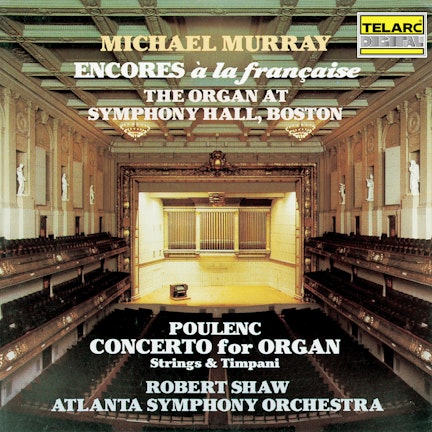
Encores à la française - Poulenc: Organ Concerto, FP 93
Northern Lights - Organ of Nidaros Cathedral, Trondheim
The Legacy of Johann Sebastian Bach
The Emperor's Fanfare
Organ Works
French Organ Masterworks
Organ Recital: Higgs, David - Bach, J.S. / Franck, C. / Schumann, R. / Mozart, W.A. / Conte, D. / Liszt, F. / Daquin, L. (Inaugural Recital)