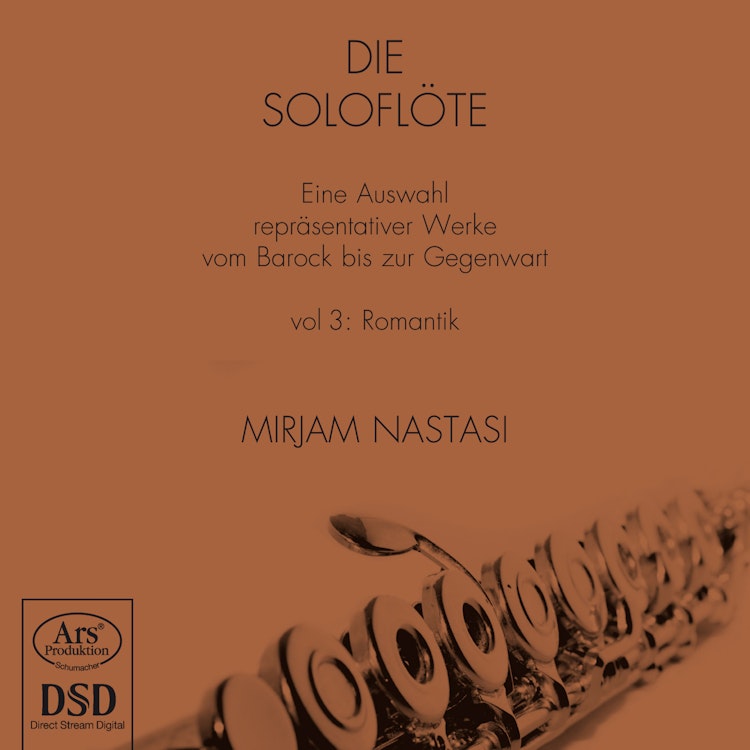
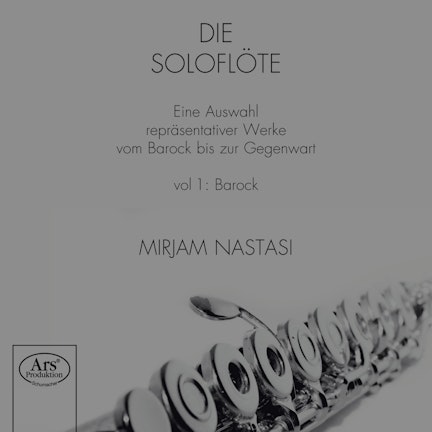
Many of the works on this album are premiere recordings, and the collection aims to make visible a piece of historical practice ranging from simple exercises to challenging concert pieces.
Album & Artwork
This recording is the third of four CDs that correspond to the sheet music edition "Die Soloflöte" (The Solo Flute) by Edition Peters, which compiles solo flute literature from the Baroque to the modern era.
Performer Biography
Mirjam Nastasi, the flutist on this recording, is a professor for flute and methodology at the Hochschule für Musik Freiburg and was its rector from 1996 to 2006.
Historical Context
The Romantic era, after the deaths of Beethoven and Schubert, is often considered the least productive period for solo flute literature, as major composers like Weber, Mendelssohn, Schumann, or Brahms wrote no concertos or solo pieces for the instrument.
Instruments
Despite the improvements of the Boehm flute, some successful flutists, like Louis Drouet and Jean-Louis Tulou, rejected it, preferring the softer sound and varied timbres of the older conical-bore, multi-keyed transverse flute.
Composition History
The project to publish the "Die Soloflöte" series, which this album is part of, began in 1986 after Mirjam Nastasi discovered many new works in the library of the Gesellschaft der Musikfreunde in Vienna.
Instruments
Theobald Boehm (1794-1881) developed a revolutionary new flute type, first a conical ring key flute in 1832, and later metal flutes with cylindrical bore and parabolic headjoints from 1847, which led to the Boehm system still used today.
You might also enjoy...
A Virtuoso Journey
The Modern Recorder
Telemann: 12 Fantasias for Flute Solo, TWV 40:2-13
Air
Mercadante: Arie e capricci
Souvenir
Kreisler Inspirations
Solitary Changes 2
All Your Diamond Tears
Les Amours d'un Rossignol - Musique pour le flageolet français