Diepenbrock considered his Hymne for violin and piano to be his 'lyrical discourse,' and its main theme was originally conceived as a wedding march for grand organ.
Composition History
Diepenbrock's most impressive orchestral song, Im grossen Schweigen, was composed in 1905 after the death of his mother, and was inspired by a Friedrich Nietzsche aphorism, his impending fatherhood, and a new friendship.
Composer Biography
Alphons Diepenbrock (1862-1921) was a Dutch composer who was never professionally trained as a musician, instead holding a PhD in classics and working as a teacher of Greek and Latin.
Compositional Technique
Diepenbrock's early compositions show knowledge of modern harmony, counterpoint, and textual setting, influenced by Palestrinian polyphony and Wagner's chromatic language.
Composition History
The orchestral version of Diepenbrock's Hymne for violin and piano, which assigns the violin part to all orchestral violins, was premiered in 1899 even before the original duo version.
Compositional Technique
Diepenbrock's Hymnen an die Nacht for voice and orchestra, along with other works, are considered symphonic poems with obligato voice, where the orchestra acts as stage, set, and protagonist.
Composer's Artistic Vision
Diepenbrock's Catholic background deeply influenced his life and music, leading to a predilection for vocal works and the selection of religious or poetic texts.
You might also enjoy...
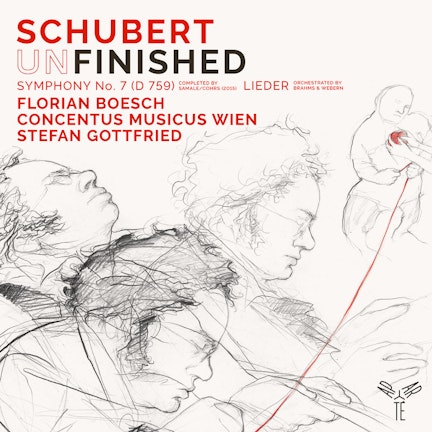
Schubert: Symphony No. 7 in B-Flat Major, D. 759 "Unfinished", Lieder (Orchestrated by Webern, Brahms)
Folk Songs
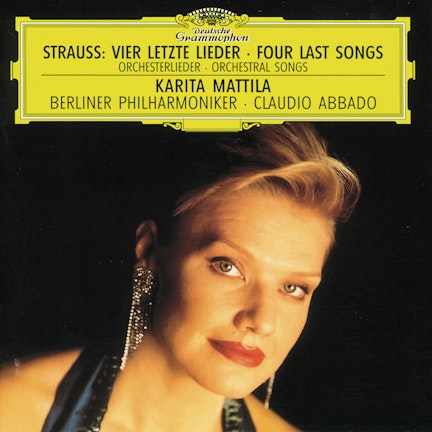
Strauss: Orchestral Songs, Vol. 1
Sutermeister: Orchestral Works, Vol. 2
Grieg: Symphonic Dances / 6 Orchestral Songs
Grieg: Complete Symphonic Works, Vol. V
Richard Strauss: Don Quixote & Selected Songs
Grieg: Symphonic Dances, Six Songs for Voice and Orchestra & Sigurd Jorsalfar Suite
Strauss: Don Juan, Lieder, & Macbeth
Canteloube: Songs of the Auvergne
Strauss: Aus Italien, Winterweihe, Mein Auge, Das Rosenband & Befreit