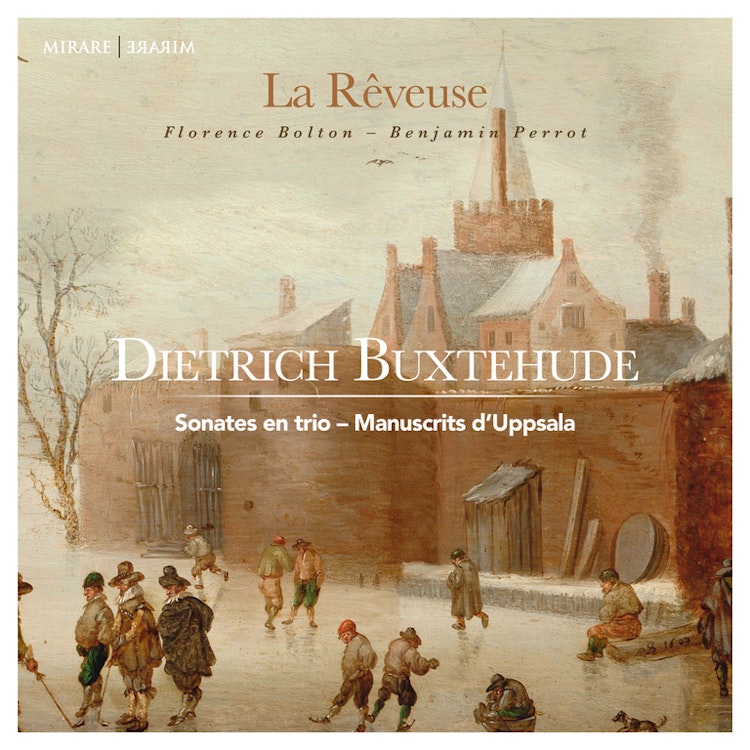
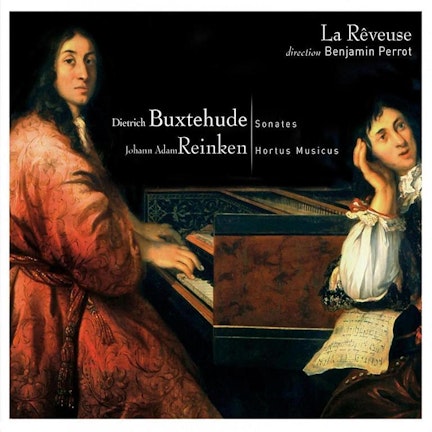
Dietrich Buxtehude: Sonates en trio – Manuscrits d’Uppsala
2/3/2017, 30 Tracks, 1:09:21
Featuring
Benjamin Perrot
Florence Bolton
Sébastien Wonner
Emily Audouin
Stéphan Dudermel
Carsten Lohff
La Rêveuse
Dietrich Buxtehude
Dietrich Becker
Anonymous
Did you know?
1/7
Historical Context
In the 17th century, Lübeck was a key member of the Hanseatic League, controlling Baltic trade and boasting one of North Germany's largest commercial harbors.
Composition History
Buxtehude's trio sonatas, including Opus 2, were published by Nicolaus Spieringk in Hamburg and were considered works of his maturity.
Cultural Impact
J. S. Bach traveled on foot from Arnstadt to Lübeck to meet and hear Buxtehude, and this encounter influenced Bach's style, leading to 'curious variations' in his chorales.
Composer's Artistic Vision
Buxtehude's sonatas are considered a peak of the stylus phantasticus, a genre where imagination and fantasy are pushed to extremes, and he sought a permanent effect of surprise.
Composer Biography
Dietrich Buxtehude, born in Helsingborg, Denmark, in 1637, became the organist and administrator of the Marienkirche in Lübeck in 1668, a prestigious position he held until his death.
Compositional Technique
Buxtehude's sonatas often feature systematic stringing together of highly contrasted sections, similar to the Italian canzona, and he was fascinated by improvisation on an ostinato bass.
Critical Reception
Sébastien de Brossard, a French music theorist and collector, owned a copy of Buxtehude's sonatas and described them as 'excellent pieces but which seem to me extremely difficult to play'.
You might also enjoy...
Finger: Music for European Courts and Concerts
The London Album
Playhouse Aires - 18th Century English Theatre Music