The Totentanz also draws inspiration from the Deutschen Sprüche von Leben und Tod (German Aphorisms on Life and Death) by Renaissance composer Leonhard Lechner Athesinus, a work rediscovered in the 1920s.
Compositional Technique
The recording includes flute interludes, composed by Distler for a 1934 performance, which act as meditative counterpoints and provide a more coherent form to the work.
Instruments
The flute variations in Distler's Totentanz are performed on a replica Renaissance flute by Giovanni Tardino, providing a dual historical reference.
Performer Biography
Christian Steyer, the speaker on this album, is a multi-talented artist known as an actor, musician, and speaker, with extensive work in film, television, and audio dramas.
Composition History
The Totentanz (Dance of Death) was inspired by late Gothic life-size paintings of the Dance of Death in St. Mary's Church in Lübeck, which were destroyed in an air raid in 1942.
Composer Biography
Hugo Distler (1908-1942) grew up in Nuremberg, where his compositional model, Leonhard Lechner Athesinus (1553-1606), had also worked.
Compositional Technique
Distler's Totentanz combines choral settings of aphorisms by Angelus Silesius with a spoken dialogue between Death and his victims, written by Johannes Klöcking.
You might also enjoy...
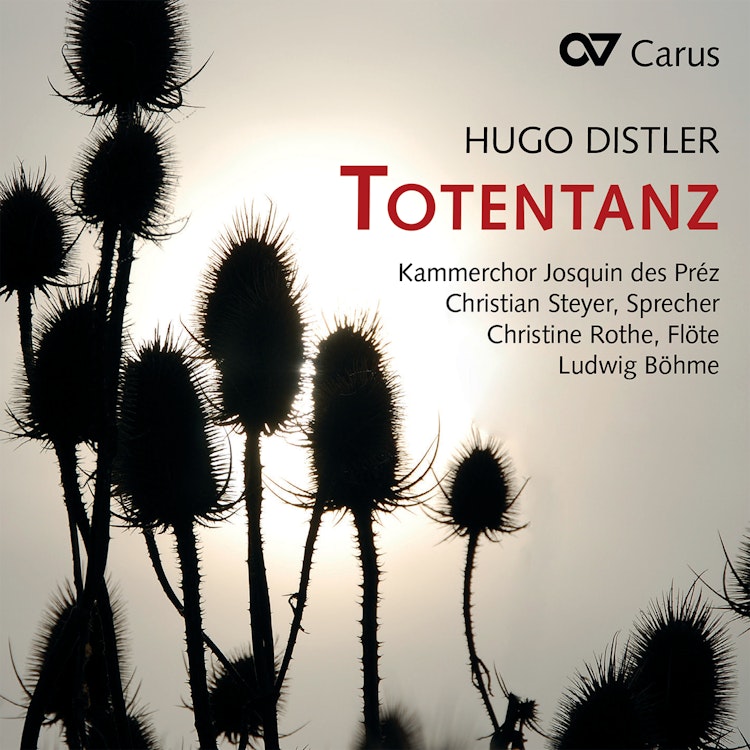
Distler: Totentanz
Schoenberg, A.: Violin Concerto / Ode To Napoleon / A Survivor From Warsaw
Norgard: Lygtemaendene Tager Til Byen / Sorensen: Den Lille Havfrue
A.Holmes: Trois anges sont venus ce soir (Arr. Jean-François Daigneault)
Ammann: Missa Defensor Pacis
David Philip Hefti: Die Schneekönigin
Duffy: Heritage - Symphonic Suite
Grieg: Peer Gynt (Complete Play and Complete Incidental Music)