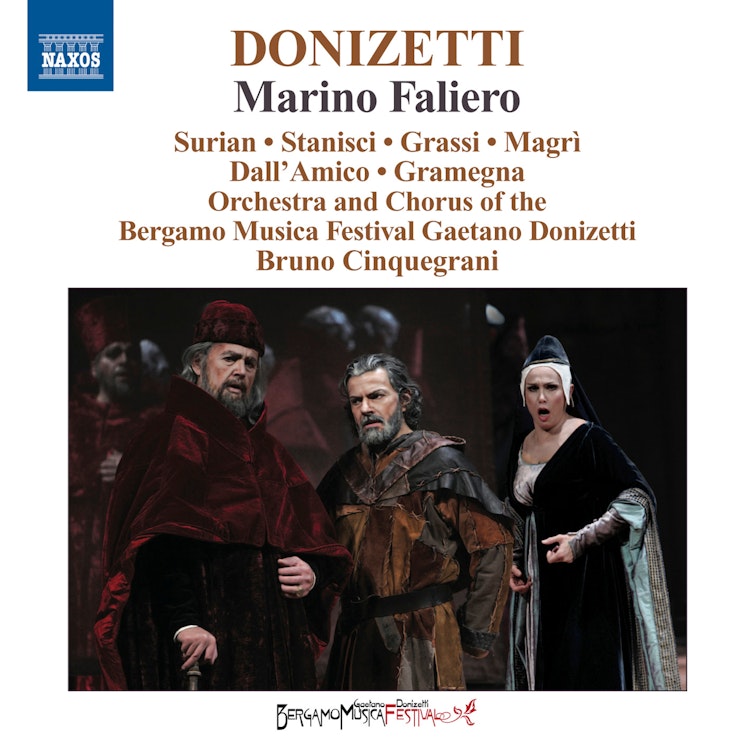
Despite its weaknesses, Marino Faliero is considered a major work of Italian Romanticism, expressing a strong desire for freedom and political independence.
Cultural Impact
The historical Marino Faliero was condemned to damnatio memoriae, meaning his portrait in the Doge's Palace was replaced with a black shroud bearing a Latin inscription about his crimes.
Notable Performances
Marino Faliero enjoyed a long and distinguished history throughout the 19th century, including its American premiere in New Orleans in 1842, before disappearing from the repertoire until its revival in 1966.
Composition History
Both Donizetti's Marino Faliero and Bellini's I Puritani were commissioned by Rossini for performance at the Théâtre Italien in Paris in 1835.
Historical Context
The opera is based on the historical figure Marino Faliero, the 55th Doge of Venice, who attempted a coup d'etat in 1355 and was beheaded.
Critical Reception
The premiere of Marino Faliero in Paris was overshadowed by Bellini's I Puritani, leading to a rivalry between the two composers.
Composition History
Donizetti's opera Marino Faliero was his fiftieth opera and premiered in Paris on March 12, 1835.