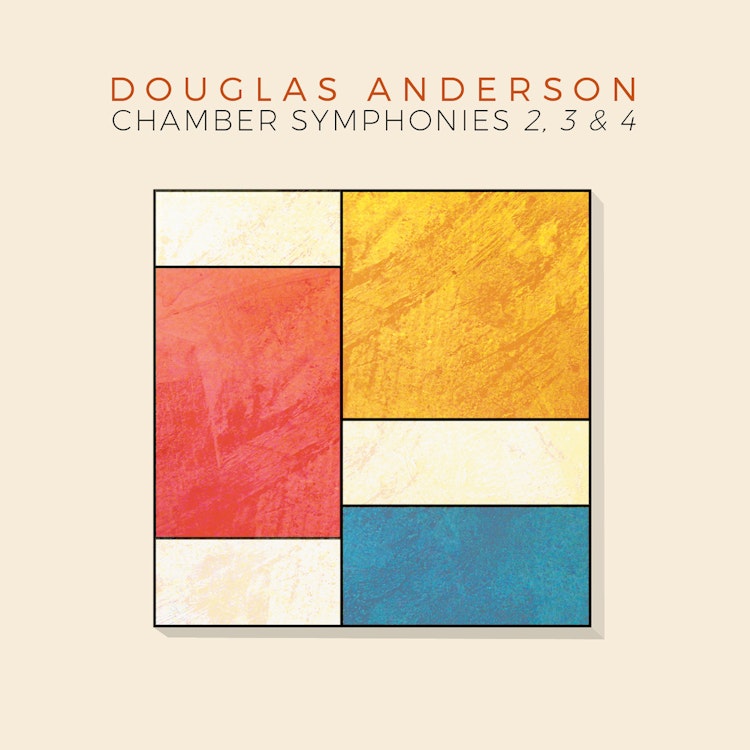
Douglas Anderson: Chamber Symphonies Nos. 2, 3 & 4
1/8/2016, 9 Tracks, 55:11
Featuring
Margaret Swinchowski
Kurt Briggs
Suzanne Gilchrest
Ina Litera
di.vi.sion
Eight Strings & a Whistle
Douglas Anderson
Did you know?
1/7
Compositional Technique
The pitch materials for melodies and harmonies in Douglas Anderson's works are derived from the pitch characteristics of the instruments themselves, such as open strings, high/low notes, and harmonics.
Compositional Technique
A compositional method Douglas Anderson explores, called 'unordering,' loosens strict serial ordering, allowing the row to function more like a scale in traditional tonal music.
Composer Biography
Douglas Anderson's interest in chamber symphonies began as a student after studying and conducting Arnold Schoenberg's two chamber symphonies.
Composer's Artistic Vision
Douglas Anderson believes a composer's task is to present music that can entertain, energize, relax, excite, depress, amuse, entrance, confuse, clarify, change moods, or provide spiritual experiences.
Compositional Technique
Douglas Anderson's chamber symphonies use a plan of three connected movements, rather than the four separate movements of traditional orchestral symphonies, inspired by Arnold Schoenberg's flexibility of form.
Composition History
Composer Douglas Anderson wrote these three Chamber Symphonies on request for particular ensembles, often composed of colleagues and friends.
Compositional Technique
Douglas Anderson's chamber symphonies, like their larger orchestral counterparts, create varied and multifaceted musical worlds but with a necessarily limited timbral and harmonic palette due to the small number of instruments.
You might also enjoy...
Greek Wind Quintets
Diriam, Richard: She Sings, She Screams
Kalamos Clarinet Quartet: Works for Clarinet Quartet
Liquid Melancholy: Clarinet Music of James M Stephenson