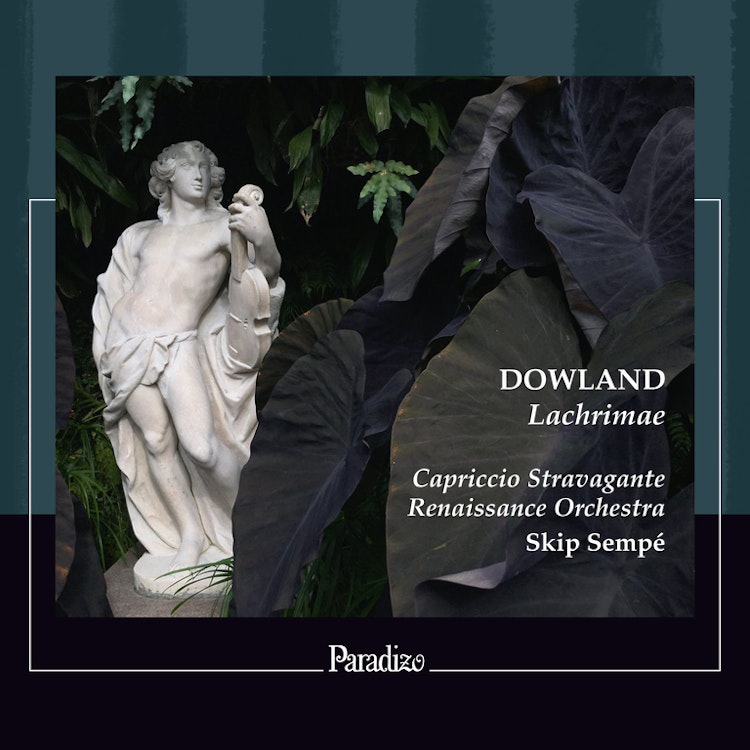
Skip Sempé, the artistic director of this recording, proposes a new performance order and instrumentation for the 21 Lachrimae dances, departing from the original printed order and typical five viols and lute.
Compositional Technique
The printed order of the pieces in Dowland's Lachrimae begins with grave Pavans, followed by Galliards, then Almands, a common practice to demonstrate a composer's serious abilities.
Composer Biography
John Dowland was more famous in his time as a lutenist than as a composer, a common occurrence where great performers were not always great composers, and vice versa.
Composition History
The original title of the collection is 'Lachrimae or Seven Teares, figured in Seven Passionate Pavans, with divers other Pavans, Galiards, and Almands, set forth for the Lute, Viols or Violins, in five parts'.
Composer's Artistic Vision
John Dowland dedicated his Lachrimae to Princess Anna, Queen of England, Scotland, France, and Ireland, noting that music's tears are pleasant and not always shed in sorrow.
Interpretation
The Pavans in Dowland's Lachrimae are categorized as 'Pavana Fantazia', meaning they were intended for listening rather than for dancing.
Composition History
John Dowland's Lachrimae cycle is considered one of the finest instrumental dance music collections from the turn of the 17th century.
You might also enjoy...
Trabaci: Ricercate, canzone francese, capricci, canti fermi, gagliarde, partite diverse, toccate, durezze e ligature … , Book 1
John Dowland: Lachrimae Or Seven Tears
Dowland - Lachrimae
Susato: Danseyre 1551
Lachrimae
Poliziano: La fabula di Orpheo
Dowland: Lachrimae
Arbeau: Orchésographie
Maione: Primo libro di diversi Capricci per sonare