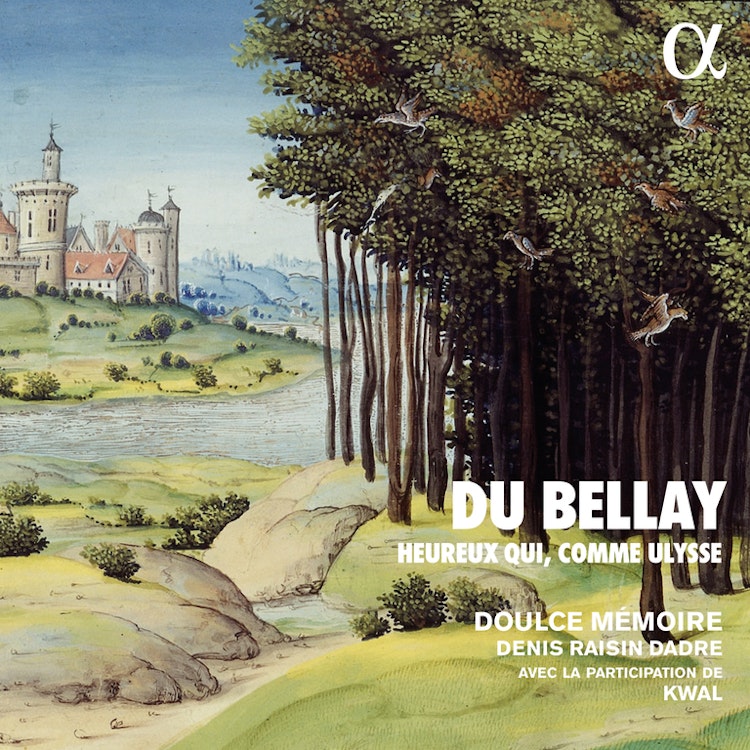
The lyre, along with the lute, was considered the 'king of instruments' by the Pléiade poets and was commonly used in Italy and at the French court of Henri II to accompany poetry recitation.
Composer Biography
Joachim Du Bellay, a French poet, was a member of the influential 'Pléiade' group and published a key avant-garde manifesto, Défense et illustration de la langue française, in 1549.
Composition History
Despite being a prominent poet, Joachim Du Bellay's works were set to music only 37 times in the 16th century, far less than his contemporary Ronsard, who actively encouraged musical settings.
Recording & Production
The recording was made in January 2022 at the Musée Jean Lurçat in Angers, France, as part of a program by the City of Angers to celebrate the 500th anniversary of Joachim Du Bellay's birth.
Composer's Artistic Vision
For Du Bellay, poetry's value lay in its ability to evoke emotion and its inherent musicality, believing that a poem should 'anger, calm, delight, grieve, astonish' the listener.
Interpretation
This album includes 'slam' performances of Du Bellay's sonnets by Kwal, drawing a connection between the Pléiade poets' desire to declaim texts to the lyre and modern slam poetry.
You might also enjoy...
L'Amour de moy
Orlando di Lasso: Chansons, Madrigale, Lieder
Ockeghem: Les chansons
Guillaume de Machaut
Josquin Desprez - Motets and Chansons
Toutes les nuits
Janequin: La chasse
Variations amoureuses
As Brazil Was Discovered
Adieu m'amour. Chansons et motets de Guillaume Dufay