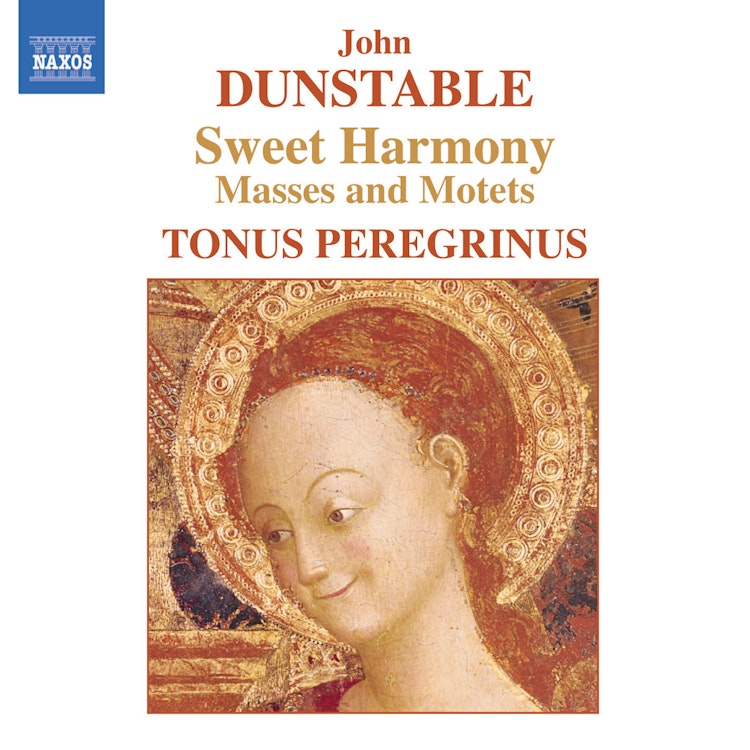
Dunstable: Quam Pulchra Es / Veni Sancte Spiritus / Mass Movements
4/18/2006, 12 Tracks, 1:10:07
Featuring
Antony Pitts
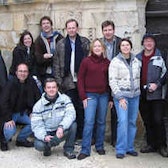
Tonus Peregrinus
John Dunstable
Did you know?
1/7
Performer Biography
TONUS PEREGRINUS, the ensemble on this recording, was founded in 1990 by composer and producer Antony Pitts while he was studying at New College, Oxford.
Compositional Technique
Dunstable is credited with converting the 'sweet-sounding thirds' used by earlier English musicians into fully-resonant triads (three-note chords), a significant development in harmony.
Composer's Artistic Vision
Dunstable's rich harmony, characterized by cross-relations and major triads on different scale degrees, became a distinctive English musical trait that persisted for centuries.
Historical Context
In 1475, the musicologist Tinctoris credited English composers, particularly John Dunstable, with transforming music into a 'new art' that rendered earlier works obsolete.
Recording & Production
This recording includes a four-part Gloria in canon, which was recently deciphered by Margaret Bent, with a speculative two-part canon added underneath by the performers.
Critical Reception
Continental composers Dufay and Binchois were influenced by Dunstable's 'new method of making fresh harmony,' which was described as joyful and remarkable in a 1442 poem by Martin le Franc.
Composer Biography
John Dunstable, despite being considered the first truly great English composer, is largely unknown today, partly because his works survive mostly in manuscripts scattered across Continental Europe.
You might also enjoy...
Polyphonies oubliées - Faux bourdons
Weihnachtsgesänge des XV. Jahrhunderts
Live in Greece: From Constantinople to California
Old World Christmas
Konrad Ruhland Conducts Gregorian Chant
Sing Thee Nowell
Le chant de Virgile
Christmas Music
Hans Leo Hassler: In dulci jubilo
Hassler: In dulci jubilo
Sermisy: Languir me fais - Purcell: O Dieu qui vois et bénis nos pleurs - Ardeau: Belle qui tiens ma vie
Haven
Le Chant de Virgile
NPR Milestones of the Millennium: CHANT - Hymns and Sequences - Gloria in excelsis Deo