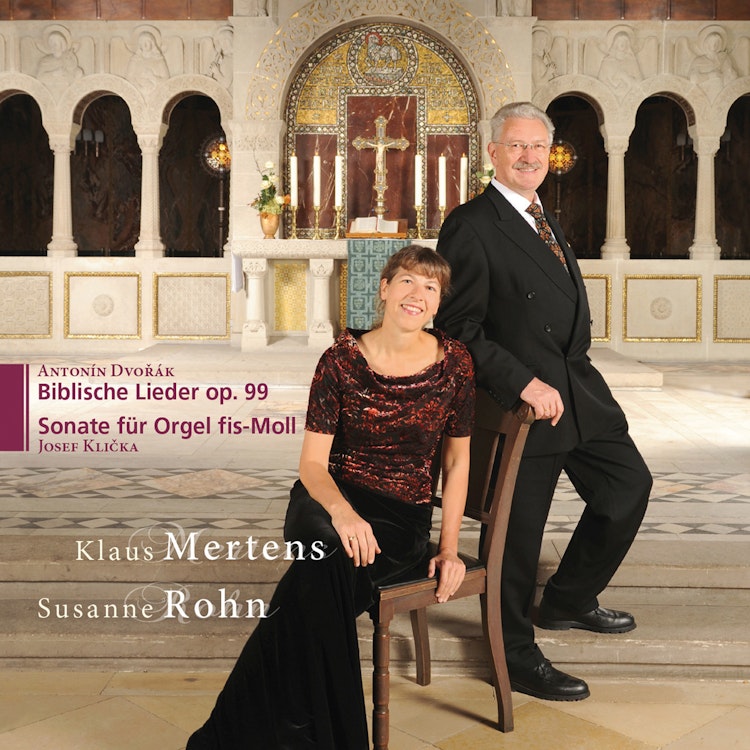
Dvořák: 10 Biblical Songs, Op. 99 - Klička: Organ Sonata in F-Sharp Minor
12/4/2013, 14 Tracks, 1:04:06
Featuring
Klaus Mertens
Susanne Rohn
Antonín Dvořák
Josef Klička
Did you know?
1/7
Instruments
The Sauer organ at Erlöserkirche Bad Homburg, built in 1908 by Wilhelm Sauer, is an instrument that would have been precisely to Josef Klička's taste, as Sauer also built the organ at Prague's Rudolfinum that influenced Klička's music.
Composer's Artistic Vision
For his 'Biblical Songs', Dvořák chose the Protestant 'Kralitzer Bibel' from the late 16th century, a text considered a foundational document of the Czech language, similar to Luther's Bible for German.
Composer Biography
Josef Klička, a Bohemian composer and organist, became a teacher at the Prague Organ School in 1885, the same institution where he had received his own musical training.
Historical Context
Dvořák's parents supported his musical talent and had him learn German, which was useful for career advancement in the Bohemian crownland of the Austrian Emperor.
Composer Biography
Antonín Dvořák, known for 'Rusalka' and 'Symphony From the New World', was originally an organist, having graduated from the Prague Organ School in 1859.
Compositional Technique
In Dvořák's 'Biblical Songs', the voice and accompanying instrument often act as 'antipodes', with the instrument responding to or emphasizing the voice rather than continuously supporting it.
Composition History
Dvořák composed his 'Biblical Songs' in New York in March 1894, during a period of financial difficulty for his patron Jeanette Thurber and concern for his ill father.
You might also enjoy...
Biblical Songs
Rheinberger: Organ Sonatas, Op. 65 & 98 - Lieder for Baritone and Organ
St Asaph Experience
Durufle: Messe Cum Jubilo / Organ Suite, Op. 5
Tchaikovsky & Saint-Saëns: Arrangements for Organ 4-Hands
Rheinberger, J.G.: Stern Von Bethlehem (Der) / Rhapsodie in D Major / Organ Sonata No. 7
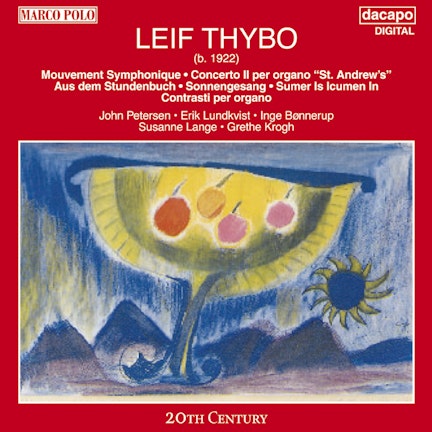
Thybo: Mouvement Symphonique / Organ Concerto / Contrasti
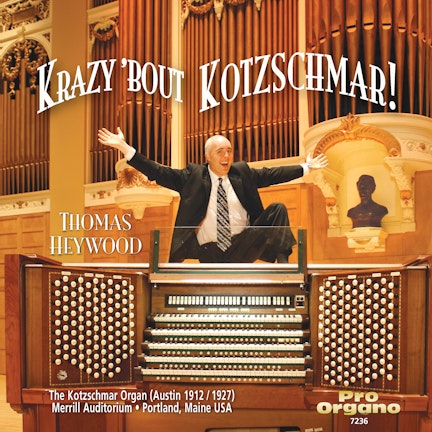
Krazy 'Bout Kotzschmar
Schoenberg, A.: Kol Nidre / Bernstein, L.: Halil / Bloch, E.: Baal Shem / Zeisl, E.: Requiem Ebraico (Remembrance)