Antonín Dvořák's Cello Concerto was written in New York in 1894-95 after he heard Victor Herbert's Second Cello Concerto, which changed his doubts about the cello's power against a late-Romantic orchestra.
Compositional Technique
Saint-Saëns's Cello Concerto No. 1 is a compact piece where its three movements masquerade as one, with much of its thematic material derived from a descending triplet figuration.
Compositional Technique
Inspired by Victor Herbert's orchestration, Dvořák added a tuba, piccolo, and triangle to his Cello Concerto, along with a sensitive use of three trombones.
Composer's Artistic Vision
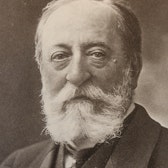
Camille Saint-Saëns, composer of the Cello Concerto No. 1, believed that art is primarily about form, elegant lines, harmonious colors, and beautiful harmonic progressions, rather than just expression and passion.
Performer Biography
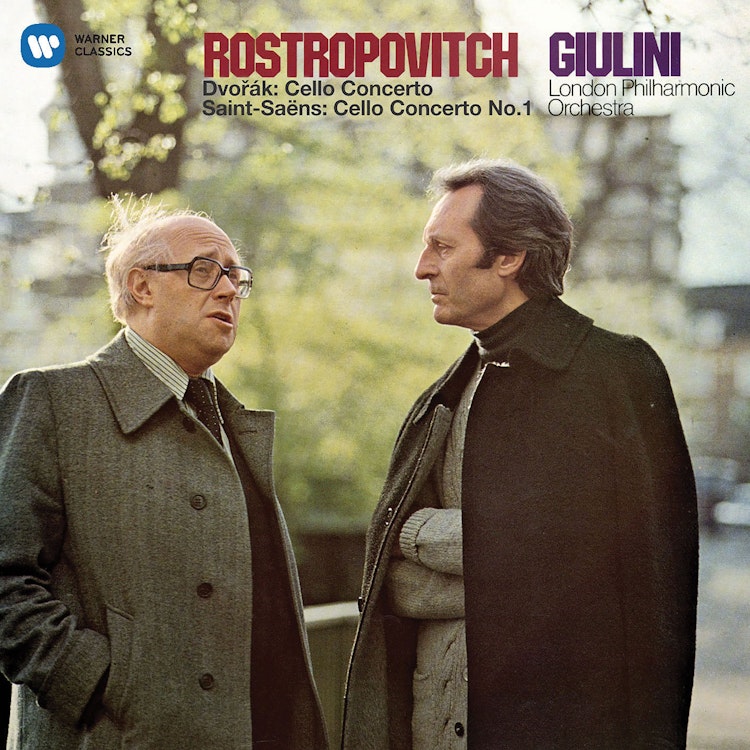
Mstislav Rostropovich, the cellist on this recording, was a graduate of the Moscow Conservatory where he studied cello and composition with Dmitri Shostakovich.
Composition History
Josefina Čermáková's death prompted Dvořák to rewrite the end of his Cello Concerto, incorporating her favorite song, 'Leave me alone,' as a touching farewell.
Composer Biography
Dvořák's Cello Concerto is deeply personal, reflecting his enduring affection for his former pupil Josefina Čermáková, who was destined to become his sister-in-law.