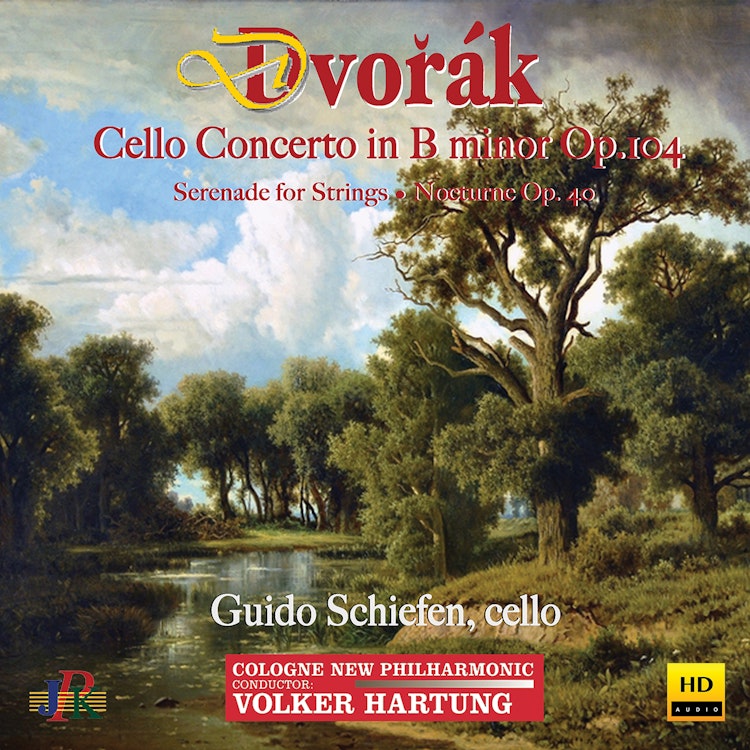
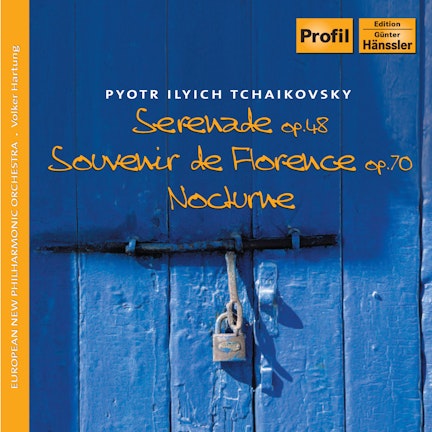
Dvořák: Cello Concerto, Serenade for Strings & Nocturne in B Major
11/16/2018, 9 Tracks, 1:17:04
Featuring
Volker Hartung
Guido Schiefen
Junge Philharmonie Köln
Antonín Dvořák
Did you know?
1/7
Composer Biography
Dvořák's career as a composer gained traction after Friedrich Smetana, a fellow Czech composer, began performing his pieces.
Composer Biography
Antonín Dvořák, born in 1841, was the son of a butcher and innkeeper, and was initially apprenticed to a butcher before his parents allowed him to study music at age sixteen.
Composer Biography
Johannes Brahms was a judge on the Austrian State Musical Commission that awarded Dvořák a grant in 1874, and the two composers became lifelong friends.
Composer's Artistic Vision
Dvořák believed that great music stemmed from the everyday songs and sounds of people, advocating for musicians to find inspiration in street singers and whistling boys.
Compositional Technique
The Notturno Op. 40 for string orchestra originated as the slow movement of Dvořák's early String Quartet No. 4, and was later adapted and included in his String Quintet No. 2 before becoming a standalone piece.
Composition History
Dvořák was invited to New York in 1891 by Mrs. Jeanette Thurber to direct the National Conservatory and help establish a national style of American music.
Composition History
The Serenade for Strings in E major, Op. 22, was composed in just two weeks in May 1875, a period when Dvořák was happily married and recognized as a composer.