Antonín Dvořák, who became a famous Czech composer alongside Smetana, was significantly supported early in his career by Johannes Brahms.
Composition History
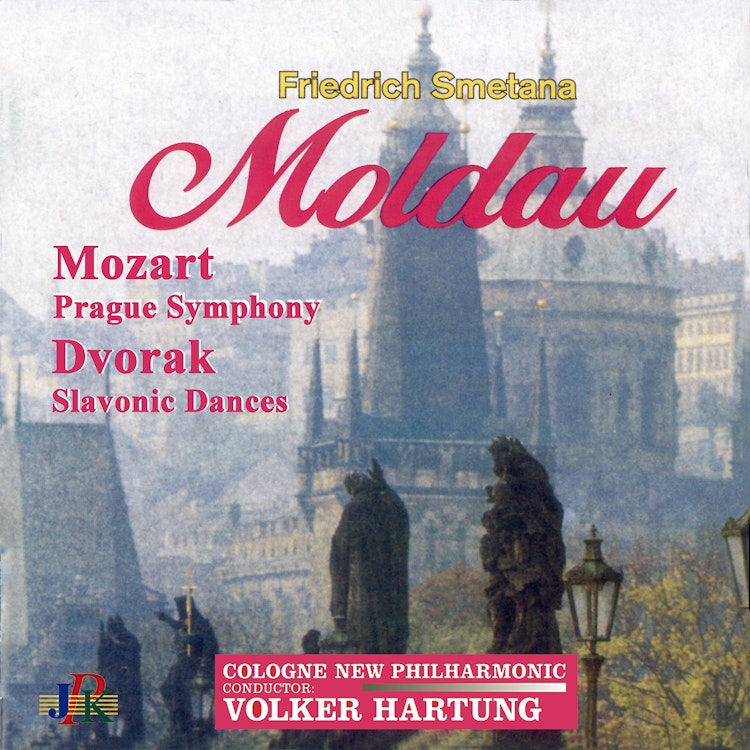
Mozart wrote his Symphony No. 38, known as the 'Prague Symphony', specifically for the Prague Theatre Orchestra, expressing his affection for the Czech musicians.
Compositional Technique
Mozart's 'Prague Symphony' surprisingly lacks a minuet, a traditional Viennese dance movement, suggesting it was exclusively written for the discerning Prague audience.
Performer Biography
Volker Hartung, the artistic director of the Cologne New Philharmonic Orchestra, studied conducting with Sergiu Celibidache and Andreas Brockmann, and was influenced by conductors like Toscanini and Mravinsky.
Cultural Impact
Bedřich Smetana's 'The Moldau' became his most famous work and a symbol of the new Czech musical school, describing the origin and course of the river.
Composition History
Antonín Dvořák's 'Slavonic Dances' were commissioned by publisher Simrock, who suggested Brahms' 'Hungarian Dances' as a model, but Dvořák chose to base them almost exclusively on Bohemian folklore.
Historical Context
Bedřich Smetana, a city-dweller, spoke German his entire life and only learned to write Czech in old age, reflecting the suppression of the Czech language by the Austrians.
You might also enjoy...
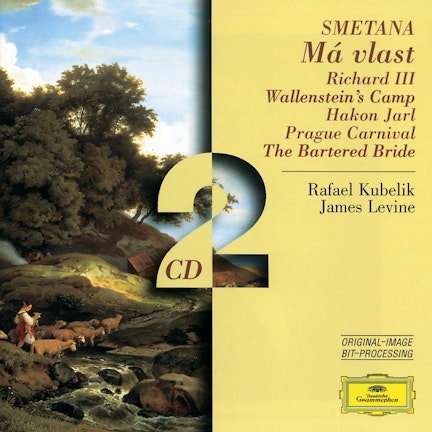
Smetana: Má vlast; Richard III; Wallenstein's Camp; Hakon Jarl etc.
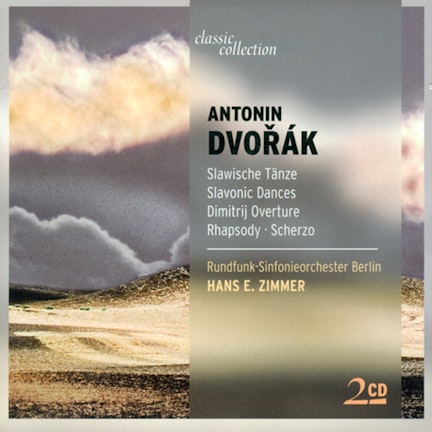
Dvorak, A.: Slavonic Dances / Festival March / The Water Goblin / Scherzo Capriccioso / Rhapsody in A Minor / Dimitrij
Dvorák : Symphony No.9, 'From the New World', Czech Suite & 2 Slavonic Dances
Orchestral Music (Encores) - Mozart, W.A. / Dvorak, A. / Brahms, J. / Strauss Ii, J. / Weinberger, J. / Bizet, G. (Dresden Philharmonic, Burgos)
The Fantastic Philadelphians
Barber: Adagio & Other Orchestral Masterpieces
Jean Martinon – The Philips Legacy
Sir Thomas Beecham: The English Collection
Kodály: Háry János Suite/Dances of Galánta/Peacock Variations, etc.