Antonín Dvořák arrived in New York on September 26, 1892, having just completed a farewell tour of Bohemia and Moravia.
Performer Biography
András Keller, the conductor of Concerto Budapest, is a world-renowned Hungarian violinist, pedagogue, and founder of the Keller Quartet.
Compositional Technique
Dvořák found a style in America that transformed his homeland's local color into a supranational sound, using pentatonic scales, minor scales without certain degrees, and strong syncopation like the Scotch snap.
Composer's Artistic Vision
Dvořák's 'multi-ethnic' approach in the Ninth Symphony, fusing American Indian and Bohemian elements, is seen as a forerunner to composers like Hans Werner Henze.
Recording & Production
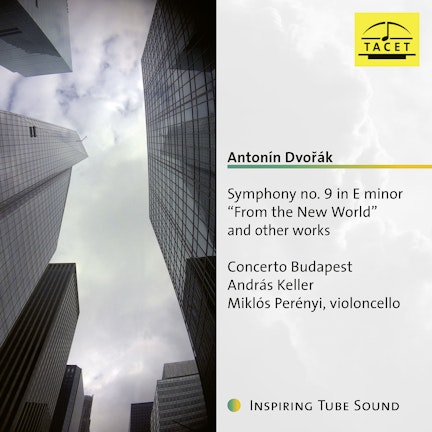
This album features Concerto Budapest, one of the most progressive and versatile symphonic orchestras based in Budapest, Hungary, with a history spanning over 100 years.
Composition History
Dvořák's 'New World Symphony' was not conceived upon his arrival in New York but became his greatest symphonic masterpiece.
Performer Biography
Miklós Perényi, the cellist on this recording, studied with the legendary Pablo Casals in Zermatt and Puerto Rico in 1965 and 1966.
You might also enjoy...
Schumann: Concerto-Allegro, Concert Piece For 4 Horns, Symphony No. 1
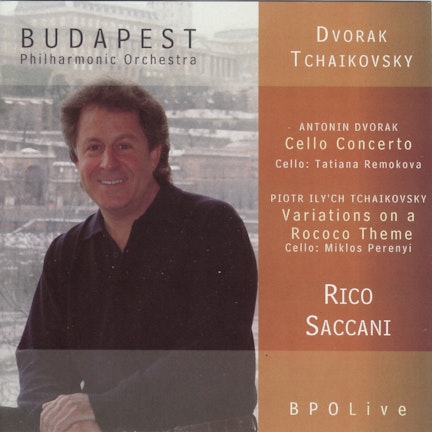
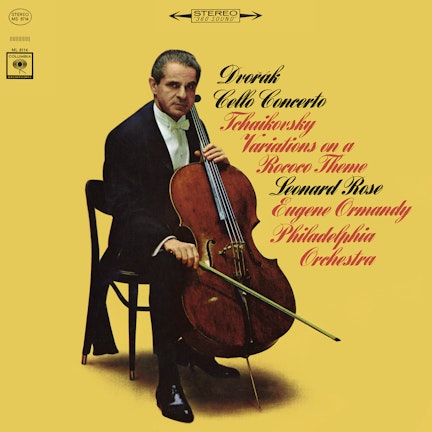
Dvořák & Respighi: Works for Cello & Orchestra
Tchaikovsky: Pezzo capriccioso, Variations on a Rococo Theme & Serenade
Dvořák: Symphony No. 9 in E Minor "From the New World" & Other Works